By Greg Miller
Los Angeles Times
February 17, 2008
After 9/11, the agency spent millions setting up front companies overseas to snag terrorists. Officials now say the bogus firms were ill-conceived and not close enough to Muslim enclaves.
The CIA set up a network of front companies in Europe and elsewhere after the Sept. 11 attacks as part of a constellation of “black stations” for a new generation of spies, according to current and former agency officials.
But after spending hundreds of millions of dollars setting up as many as 12 of the companies, the agency shut down all but two after concluding they were ill-conceived and poorly positioned for gathering intelligence on the CIA’s principal targets: terrorist groups and unconventional weapons proliferation networks.
The closures were a blow to two of the CIA’s most pressing priorities after Sept. 11– expanding its overseas presence and changing the way it deploys spies.
The companies were the centerpiece of an ambitious plan to increase the number of case officers sent overseas under what is known as “nonofficial cover,” meaning they would pose as employees of investment banks, consulting firms or other fictitious enterprises with no apparent ties to the U.S. government.
But the plan became the source of significant dispute within the agency and was plagued with problems, officials said. The bogus companies were located far from Muslim enclaves in Europe and other targets. Their size raised concerns that one mistake would blow the cover of many agents. And because business travelers don’t ordinarily come into contact with Al Qaeda or other high-priority adversaries, officials said, the cover didn’t work.
Summing up what many considered the fatal flaw of the program, one former high-ranking CIA official said, “They were built on the theory of the ‘Field of Dreams’: Build them and the targets will come.”
Officials said the experience reflected an ongoing struggle at the CIA to adapt to a new environment in espionage. The agency has sought to regroup by designing covers that would provide pretexts for spies to get close to radical Muslim groups, nuclear equipment manufacturers and other high-priority targets.
But current and former officials say progress has been painfully slow, and that the agency’s efforts to alter its use of personal and corporate disguises have yet to produce a significant penetration of a terrorist or weapons proliferation network.
“I don’t believe the intelligence community has made the fundamental shift in how it operates to adapt to the different targets that are out there,” said Rep. Peter Hoekstra of Michigan, the top Republican on the House Intelligence Committee.
The cover arrangements most commonly employed by the CIA “don’t get you near radical Islam,” Hoekstra said, adding that six years after the Sept. 11 attacks, “We don’t have nearly the kind of penetrations I would have expected against hard targets.”
Whatever their cover, the CIA’s spies are unlikely to single-handedly penetrate terrorist or proliferation groups, officials said. Instead, the agency stalks informants around the edges of such quarry – moderate Muslims troubled by the radical message at their mosques; mercenary shipping companies that might accept illicit nuclear components as cargo; chemists whose colleagues have suspicious contacts with extremist groups.
Agency officials declined to respond to questions about the front companies and the decision to close them.
“Cover is designed to protect the officers and operations that protect America,” CIA spokesman Paul Gimigliano said. “The CIA does not, for that very compelling reason, publicly discuss cover in detail.”
But senior CIA officials have publicly acknowledged that the agency has devoted considerable energy to creating new ways for its case officers – the CIA’s term for its overseas spies – to operate under false identities.
“In terms of the collection of intelligence, there has been a great deal of emphasis for us to use nontraditional methods,” CIA Director Michael V. Hayden said in November 2006 radio interview shortly after taking the helm at the agency. “For us that means nontraditional platforms – what folks call ‘out of embassy’ platforms – and we’re progressing along those lines.”
The vast majority of the CIA’s spies traditionally have operated under what is known as official cover, meaning they pose as U.S. diplomats or employees of another government agency.
The approach has advantages, including diplomatic immunity, which means that an operative under official cover might get kicked out of a country if he is caught spying, but won’t be imprisoned or executed.
Official cover is also cheaper and easier. Front companies can take a year or more to set up. They require renting office space, having staff to answer phones and paying for cars and other props. They also involve creating fictitious client lists and resumes that can withstand sustained scrutiny.
One of the CIA’s commercial cover platforms was exposed in 2003 when undercover officer Valerie Plame was outed in a newspaper column by Robert Novak. Public records quickly led to the unraveling of the company that served as her cover during overseas trips, a fictitious CIA firm called Brewster Jennings & Associates.
Official cover worked well for the duration of the Cold War, when holding a job at a U.S. Embassy enabled American spies to make contact with Soviet officials and other communist targets.
But many intelligence officials are convinced that embassy posts aren’t useful against a new breed of adversaries. “Terrorists and weapons proliferators aren’t going to be on the diplomatic cocktail circuit,” said one government official familiar with the CIA’s cover operations.
After the terrorist strikes, the Bush administration ordered the agency to expand its overseas operation by 50%. The agency came under intense pressure from Congress to alter its approach to designing cover and got a major boost in funding to expand the nonofficial cover program, which is commonly referred to by the acronym NOC, pronounced “knock.”
Although the agency has used nonofficial cover throughout its history, the newer front companies were designed to operate on a different scale. Rather than setting up one- or two-person consulting firms, the plan called for the creation of a companies that would employ between six and nine case officers apiece, plus support staff.
The NOC program typically had functioned as an elite entity, made up of a small number of carefully selected case officers, some of whom would spend years in training and a decade or more overseas with only intermittent contact with headquarters. But the new plan called for the front companies to serve as way stations even for relatively inexperienced officers, who would be rotated in and out much the way they would in standard embassy assignments.
“The idea was that these were going to be almost like black stations,” said a former CIA official involved in the plan to form the companies. “We were trying to build something that had a life span, that had durability.”
In the process, the agency hoped to break a logjam in getting post-Sept. 11 recruits overseas. Thousands of applicants had rushed to join the CIA after the attacks, and many were sent to Afghanistan and Iraq. But outside of those war zones, open slots were scarce.
“The embassies were full,” said a former CIA official involved in deployment decisions. “We were losing officers by the dozens because we didn’t have slots for them overseas.”
In separate interviews, two former CIA case officers who joined the agency after the attacks said that 15% to 20% of their classmates had quit within a few years. Among them, they said, was one who had earned his master’s in business administration from Harvard University and was fluent in Chinese and another who had left a high-paying job at the investment firm Goldman Sachs.
The front companies were created between 2002 and 2004, officials said, and most were set up to look like consulting firms or other businesses designed to be deliberately bland enough to escape attention.
About half were set up in Europe, officials said – in part to put the agency in better position to track radical Muslim groups there, but also because of the ease of travel and comfortable living conditions. That consideration vexed some CIA veterans.
“How do you let someone have a white-collar lifestyle and be part of the blue-collar terrorist infrastructure?” said one high-ranking official who was critical of the program.
But the plan was to use the companies solely as bases. Case officers were forbidden from conducting operations in the country where their company was located. Instead, they were expected to adopt second and sometimes third aliases before traveling to their targets. The companies, known as platforms, would then remain intact to serve as vessels for the next crop of case officers who would have different targets.
The concept triggered fierce debate within the agency, officials said.
“This was a very bitter fight,” said a CIA official who was a proponent of the plan because it insulated the fictitious firms from the actual work of espionage.
“When you link the cover to the operation, the minute the operation starts getting dicey, you run across the screen of the local police, the local [intelligence service] or even the senior people in the mosque,” the official said. “I saw this kill these platforms repeatedly. The CIA invests millions of dollars and then something goes wrong and it’s gone.”
But critics called the arrangement convoluted, and argued that whatever energy the agency was devoting to the creation of covers should be focused on platforms that could get U.S. spies close to their most important targets.
“How does a businessman contact a terrorist?” said a former CIA official involved in the decision to shut the companies down. “If you’re out there selling widgets, why are you walking around a mosque in Hamburg?”
Rather than random businesses, these officials said, the agency should be creating student aid organizations that work with Muslim students, or financial firms that associate with Arab investors.
Besides broad concerns about the approach, officials said there were other problems with the companies. Some questioned where they were located. One, for example, was set up in Portugal, even though its principal targets were in North Africa.
The issue became so divisive that the agency’s then-director, Porter J. Goss, tapped the official then in charge of the CIA’s European division, Rolf Mowatt-Larssen, to lead an in-house review of the NOC strategy.
Mowatt-Larssen sided with critics of the approach and began pulling the plug on the companies before he left the agency to take a senior intelligence post at the Department of Energy, officials said. Mowatt-Larssen declined to comment.
The agency is in the midst of rolling out a series of new platforms that are more narrowly targeted, officials said. The External Operations and Cover Division has been placed under Eric Pound, a veteran foreign officer who was CIA station chief in Athens during the 2004 Olympics.
But the agency is still struggling to overcome obstacles, including resistance from many of the agency’s station chiefs overseas, most of whom rose through the ranks under traditional cover assignments and regard the NOC program with suspicion and distrust.
In one recent case, officials said, the CIA’s station chief in Saudi Arabia vetoed a plan to send a NOC officer who had spent years developing credentials in the nuclear field to an energy conference in Riyadh.
The NOC “had been invited to the conference, had seen a list of invitees and saw a target he had been trying to get to,” said a former CIA official familiar with the matter. “The boss said, ‘No, that’s why we have case officers here.’ ”
http://articles.latimes.com/2008/feb/17/nation/na-intel17
Thursday, September 11, 2008

Wednesday, September 10, 2008
The "Al Qaeda" Bombings and Tourist Kidnappings in Algeria are Staged by Western Intelligence and Local Military Intelligence Division
 The official story:
"Al-Qaeda group behind Algiers attacks has struck before"
ALGIERS (AFP) — Al-Qaeda's Branch in the Islamic Maghreb -- previously known as the Salafist Group for Preaching and Combat (GSPC) -- which claimed responsibility for Tuesday's deadly twin car bombings in the Algerian capital, has struck several times before in 2007.
Tuesday's attacks claimed 62 fatalities according to hospital sources -- 26 of which were confirmed by the Algerian interior ministry -- with nearly 200 injured in the bombs outside the Supreme Court and the UN's refugee agency.
The GSPC changed its name to Al-Qaeda's Branch in the Islamic Maghreb (BAQMI) this year and has claimed responsibility for a number of deadly attacks, including a series of bombings in the Algerian capital on April 11 that killed 33 people. ...
http://afp.google.com/article/ALeqM5jt5ztkRrVFcpLji8UXi8Q0Huoh3w
••••••••••
Strip away the propaganda, and it's another story:
" ... Could the Algerian government be arranging events, such as ... inventing its own Osama bin Laden, to capture Washington’s attention and ensure attendant arms sales? ... "
From: "Who staged the tourist kidnappings? - El Para, the Maghreb’s Bin Laden"
mondediplo.com
... Maghreb has become a target for the United States in its military and political redeployments. Could the Algerian government be arranging events, such as the kidnapping of foreign tourists in the Sahara and inventing its own Osama bin Laden, to capture Washington’s attention and ensure attendant arms sales?
By Salima Mellah and Jean-Baptiste Rivoire
THE Algerian government launched a major diplomatic offensive early in 2003 to obtain financial and military support from Washington. Its efforts were given an enormous boost by Abderrazak “El Para”, a former Algerian special forces officer who had gone over to the Salafist Group for Preaching and Combat (GSPC). On 4 January, the day before a high-level United States military delegation arrived in Algiers to discuss the resumption of arms sales to Algeria as part of the fight against terrorism, El Para’s group attacked a military convoy near Batna, killing 43 soldiers.
On the basis of a video recording subsequently revealed as a forgery, the Algerian army’s secret service, the all-powerful Department of Intelligence and Security (DRS, formerly Military Security), tried to persuade public opinion that El Para was a lieutenant of Osama bin Laden in charge of establishing al-Qaida in the Sahel region. Shortly after, the US eased the arms embargo on Algeria and announced the sale of anti-terrorist equipment to it (1). William Burns, assistant secretary of state for near eastern affairs, had already declared in Algiers in 2002 that “Washington has much to learn from Algeria on ways to fight terrorism” (2).
Another El Para operation speeded the rapprochement between Algiers and Washington. Between 22 February and 23 March 2003, 32 tourists - 16 Germans, 10 Austrians, four Swiss, a Swede and a Dutchman - were abducted in the Illizi region of the Algerian Sahara. After secret negotiations, of which no details ever leaked out, they were released in two stages: the first group in May 2003 and the second in August 2003. A female German hostage died in the desert and was buried there.
As a target of al-Qaida, Algeria was of course a natural ally of the US. Just as the hunt for Bin Laden was used to justify the occupation of Afghanistan and the establishment of military bases in the strategically important region of central Asia, El Para was to serve as a minor bogeyman justifying a US military presence in the Sahel, alleged to be a potential rear base for al-Qaida.
In March 2004 General Charles Wald, deputy commander of the US European Command (Eucom), claimed that members of al-Qaida were trying to establish themselves “in the northern part of Africa, in the Sahel and the Maghreb. They are looking for sanctuary as they did in Afghanistan when the Taliban were in power. They need a stable place in which to equip themselves, organise and recruit new members” (3).
One thing is certain: the rapprochement between Algiers and Washington could only benefit the Algerian military regime’s efforts to have its own crimes forgotten. In the 1990s the DRS had already brilliantly exploited “Islamic terrorism” to force the West to support it. In 1993 the Algerian military command, which had been waging a merciless war against the Islamist opposition for almost two years, was intent on winning French support. France’s interior minister, Charles Pasqua, and his adviser, Jean-Charles Marchiani, enthusiastically supported the Algerian government’s policy of eradication, while President François Mitterrand and the foreign minister, Alain Juppé, favoured a less repressive approach.
Neutralise the opposition
To bring Paris into line and neutralise the Algerian opposition that had sought refuge in France, the DRS leadership and Marchiani arranged the suspicious kidnapping of three officials from the French embassy in Algiers (4). The prime minister, Edouard Balladur, finally authorised Pasqua to launch Operation Chrysanthemum, the largest round-up of the Algerian opposition in France since 17 October 1961. Pleased with this response, the Algerian secret services mounted a phoney operation to convince public opinion they had freed the French hostages from “Islamist terrorists.”
The DRS stepped up its counter-insurgency war by helping to get Djamel Zitouni, an “emir” under its control, appointed head of the Armed Islamic Group (GIA). Zitouni and his men claimed responsibility for the hijacking of an Air France Airbus in 1994, bombings of Paris’s public transport in 1995, the kidnapping and murder of Tibhirine monks in 1996, and widespread massacres of civilians. By manipulating the GIA through Zitouni, the éradicateurs (5) in the Algerian military leadership achieved their aims of discrediting the Islamists, consolidating support from Paris, and scuppering any prospect of political compromise in Algeria.
Ten years later, the DRS was apparently engaged in another bloody manipulation, this time using El Para.
El Para claims to have been the head of the bodyguard of the defence minister, General Khaled Nezzar, from 1990 to 1993 (6). He is alleged to have joined the Islamist guerrilla movement in 1992, subsequently becoming No 2 in the GSPC, which is at war with the Algerian government.
But is he really a member of the GSPC leadership? None of the documents on the GSPC website (7) mentioned Amari Saifi, alias Abou Haidara, alias El Para, until 2004. While the German tourists abducted in 2003 identified him as one of their kidnappers, only his former employers, the Algerian general staff, claimed that El Para was now acting on behalf of the GSPC. The GSPC itself never claimed responsibility for kidnapping the tourists.
The French magazine Paris Match was certain that El Para was “in charge of establishing al-Qaida in the Sahara”. Yet all the statements by GSPC representatives, those of the Sahara kidnappers as reported by their hostages, and even those of El Para’s companions in arms when interviewed by Paris Match in 2004, show that GSPC operations are dictated exclusively by Algerian concerns, even if its members declare solidarity with jihadists fighting other battles.
To prove the existence of a link between the GSPC and al-Qaida, the Algerian authorities claimed that Imad ibn al-Wahid, a Yemeni killed by the army near Batna on 12 September 2002, was an “emissary of Bin Laden in the Sahel-Maghreb region” who, before his death, recorded a message granting al-Qaida’s approval to the Algerian Salafists. Three former members of the GSPC have stated that the recording is a fake concocted by the group’s audiovisual unit (8).
Yet proof of this kind, whose only known source is the DRS or its mouthpieces in the Algerian press, has allowed the US administration to put the GSPC on its list of foreign terrorist organisations. While some US experts doubt this affiliation, they say that “the GSPC is now regularly equated with al-Qaida in the national and foreign press” (9).
Suspicions grow
While the Sahara tourists were held hostage in 2003, their mysterious kidnappers issued no communique claiming responsibility, and made no financial or political demands. It was only on 12 April 2003 that the press alleged, without offering any evidence, that the GSPC was responsible. Even more suspicious is the fact that some of those held prisoner subsequently testified that the operation was ordered by El Para rather than Hassan Hattab, the supposed head of the GSPC (10). They also reported that their kidnappers regularly communicated by radio and that Algerian army helicopters quickly appeared over the places in which they were being held, even though they were moved frequently. If El Para had been spotted by the army, why wasn’t he put out of action?
On 10 May 2003 the German foreign minister, Joseph Fischer, and the head of the federal intelligence service (BND), August Hanning, visited Algiers. The first group of hostages was freed by the Algerian army two days later. According to the official account, the military carried out a “brief attack during which precautions were taken to protect the lives of the hostages”.
On closer examination, however, the operation looks like a put-up job.
Instead of using the hostages as human shields, El Para’s men ordered them to take cover in caves. When they emerged after the attack, the tourists were surprised to see no dead or wounded, nor any sign of bloodshed, although the military were reported to have killed four kidnappers.
One of the hostages openly doubted the official version: “The Salafists were well aware of what was about to happen. They marched us 20km through the desert to a predetermined location, a geographically suitable venue for our ‘liberation’. It occurred to me much later that the whole thing might have been staged by the Algerian military . . . I still wonder whether there are links between the Salafists and the army” (11).
Although they were surrounded by government troops and had no motor vehicles, some of the kidnappers miraculously escaped, only to reappear soon after with the second group of hostages, over 1,000km away. The second group of hostages was freed in Mali on 18 August, in even stranger circumstances, after Germany, Austria and Switzerland had reportedly paid a ransom of $5m (12). From then on, people began to suspect that the ex-army officer whose terrorist operations were so helpful to the Algerian regime in its quest for international support was still secretly in the pay of his former employers.
El Para and 50 of his men were spotted and attacked by a military unit in northern Chad in March 2004. After escaping with his accomplices, he was captured by rebels from the Movement for Democracy and Justice in Chad (MDJT), which was at war with the Idriss Deby regime. The rebels soon guessed they had stumbled upon “the Salafist everyone is looking for and the international radio stations are talking about” (13).
El Para seemed sure of himself and convinced he would soon be freed: “I know a lot of people in Algiers,” he told his jailers. “If it’s money you want, we’ll give it to you.” The MDJT rejected the offer. “We contacted all the parties with a view to extraditing El Para so that he could stand trial,” says Brahim Tchouma, the MDJT’s foreign affairs representative.
Total secrecy
Three representatives of the Chadian rebels in France were discreetly invited to Algeria in April. Convinced that the Algerian authorities wanted to lay hands on their “public enemy No 1”, they accepted the invitation and were received by the formidable boss of the DRS, General Mohamed Médiène. “When we described the leader of the prisoners to him, he confirmed that it was Amari Saifi, alias Abderrazak El Para,” said Mohamed Mehdi, vice-chairman of the MDJT abroad. “The DRS officers were very well informed. They even pointed out a mistake in El Para’s satellite phone number, which we had written down on a piece of paper. They had his real number. We dialled it together and El Para’s phone, which had been recovered by our men, rang in Tibesti.” So why had the Algerian authorities not arrested him?
Even more strange, the discussions with the DRS dragged on: “The Algerians demanded total secrecy,” says Medhi. “They didn’t want us to announce El Para’s capture. We proposed that they come and get him, but they insisted we bring him to southern Algeria.”
After two weeks of fruitless discussions, the Chadian rebels wondered whether Algiers really wanted El Para back. They renewed contact with the German authorities, who issued an international warrant for his arrest. Again, the talks dragged on interminably: ever since the hostage taking, Algiers had been holding out the prospect of large contracts for German firms (14).
In May, increasingly intrigued by the embarrassment that the capture of El Para seemed to be causing, the Chadian rebels described the Algerian authorities’ strange reluctance to take charge of him in an article in Le Monde (15). That set the cat among the pigeons. A few days later the DRS dispatched a top-secret commando unit to the Chadian frontier to recover El Para by offering a large sum of money to a local MDJT commander. It also mounted a media operation to cover its tracks. On 2 June a journalist on Radio-France Internationale announced that “Abderrazak El Para, one of Algeria’s most wanted men, is free” and that “GSPC members paid a ransom of €200,000 to the Chadian rebels for his liberation and that of two other Algerian militants” (16).
The information was wrong, and the RFI journalist, who had probably been set up, later invoked mysterious “Algerian military sources”.
“I contacted our leaders immediately after the broadcast,” says Mehdi. “They denied the report but confirmed that a local commander operating near the frontier with Niger had captured El Para and two of his lieutenants.” Mehdi managed to have the prisoners handed over to the MDJT leadership. Only hours later he received a furious phone call from one of the DRS officers he had met a few weeks earlier in Algiers, who accused the MDJT of “sabotaging the handover of El Para”.
“We had made no agreement,” Mehdi says. “Why did the Algerians negotiate with one of our local commanders behind our backs? Why did they pretend we had sold El Para back to the Salafists, when Military Security was trying to recover him on the quiet?”
The MDJT then offered to hand over El Para and his men to Germany, via Libya, but the transfer of the first two prisoners in July ended badly: after taking them into custody, the Libyans announced that they had been killed in a skirmish. Convinced that the Libyans had double-crossed them, the MDJT halted the handover process with El Para still in Chad. Interviewed soon after by Paris Match journalists accompanied by a cameraman from France 2, El Para admitted responsibility for the kidnapping of the tourists in 2003 but denied he was working for Bin Laden (17).
In October the embarrassed Algerian secret services managed to persuade a local MDJT commander to hand over the unwanted prisoner. Once he was back in the hands of the DRS, El Para’s importance was played down (18).
According to reports in the Algerian press, he now supports President Abdelaziz Bouteflika’s plan for a general amnesty covering both terrorists and military leaders implicated in crimes against humanity during the “dirty war” (19).
‘Most democratic country’
Curiously, the Bush administration seemed in no hurry to get hold of “Bin Laden’s right-hand man in the Sahel”. The cynical explanation is probably the correct one: after the 9/11 attacks the US had every interest in a rapprochement with the Algerian regime. Announcing the sale of anti-terrorist equipment to Algeria in 2003, Washington declared it “the most democratic country” in the Arab world.
The main US objective was to gain military footholds in the Maghreb and the Sahel. Its pan-Sahel Initiative began in November 2003, part of a plan to restructure US military bases throughout the world, replacing large structures that were costly and inflexible with a network of small operational bases requiring limited personnel.
Northern and western Africa are central to this project because of their oil reserves, which currently cover 17% of US needs and will probably account for 25% of US imports over the next 10 years. Algeria’s Sonatrach plays a major role, as the largest company in Africa, with an estimated turnover of $32bn in 2004. The US has already stationed a contingent of 2,000 troops in Djibouti, which has been a French military base since the colonial period, and it plans to establish another dozen bases in the region: in Senegal, Mali, Mauritania, Niger, Chad, Ghana, Morocco, Tunisia and Algeria (20).
There have been Algerian media reports of the existence of an US military outpost with 400 special forces not far from Tamanrasset in the south of Algeria. Washington apparently now sees Algeria as a pivotal state, vital for its future military deployment in the region, in accordance with the geostrategic concept of a Greater Middle East.
In 2004 Washington increased the budget for the pan-Sahel initiative from $7m to $125m, which should allow it to increase arms sales to the region. But, as the Algerian press pointed out, “the sole justification for an American presence in the region is the GSPC. If El Para is killed and officially identified, or is captured and handed over to a third country, many things may have to be reassessed” (21). The elimination of El Para would embarrass the US and the Sahel countries, since it is in all their interests that he should continue to provoke trouble in the region. If he were to be arrested, it would be better for it to be done by the Algerians, to avoid embarrassing revelations.
In July 2004 the state department spokesman, Richard Boucher, said: “El Para and his accomplices must be handed over to the Algerian authorities as soon as possible, so they can be judged for the crimes of which they are accused” (22).
The US offensive is encroaching on France’s traditional zones of influence, as US firms begin to target the French strongholds of Chad, Angola and Gabon (23). The US administration is also bent on marginalising France’s military role in the region.
Despite its support for the Algerian military regime throughout the years of “total war”, France is clearly worried that it will be pushed aside by the world’s greatest power, which is advancing on all fronts - in arms supplies, oil prospecting and exploitation contracts, and trade agreements. A prime example is the Eizenstat plan to establish a US-Middle East free-trade area in opposition to the Euro-Mediterranean free-trade area planned for 2010: a free-trade agreement has already been concluded with Morocco.
With the Barcelona Process (24) at a standstill, the French government has concentrated on bilateral relations with Algeria. President Jacques Chirac’s visit in 2003, culminating in the Algiers Declaration of 2 March (25), was intended to lead to a treaty of friendship in 2005 and the establishment of an exceptional partnership in economic, cultural, scientific and military matters. It has been followed by many ministerial visits in both directions.
Faced with the reluctance of French firms to invest in Algeria, Paris drew up a global agreement on investment in the country and even envisaged a defence agreement with Algeria. But to France’s great disappointment, Algeria failed to join the International Organisation of the French-Speaking World (OIF) at the summit in Ouagadougou in November 2004.
The Algerian regime cleverly exploited the fallout from the 9/11 attacks. Understanding that the US was trying to establish a position in north Africa, it probably sponsored a local Bin Laden, or at least allowed him to operate. His capture by the Chadian rebels was not part of the programme.
The Algerian press is now hyping up a new terrorist to replace him.
According to the Algiers daily L’Expression, the authorities’ sights are on Mokhtar Belmokhtar, a bandit chief who has long been accused of links with the GSPC: “Since the kidnapping of European tourists . . . Belmokhtar’s group has become the bugbear of all western secret services” (26). Watch this space.
Translated by Barry Smerin
(1) La Tribune, Algiers, 12 October 2004.
(2) New York Times, New York, 10 December 2002.
(3) Le Quotidien d’Oran, Oran, 6 March 2004.
(4) Jean-Claude, Michèle Thévenot and Alain Freissier. See Lounis Aggoun and Jean-Baptiste Rivoire, Françalgérie, crimes et mensonges d’Etats (France-Algeria, state crimes and lies), La Découverte, Paris, 2004.
(5) The “eradicationists” are those who advocate physical elimination of the Islamist guerrillas rather than a compromise.
(6) Paris Match, Paris, 5-11 August 2004.
(7) www.jihad-algeria.com.
(8) Le Quotidien d’Oran, 23 October 2004.
(9) Le Quotidien d’Oran, 18 May 2004.
(10) Reiner and Petra Bracht, 177 Tage Angst (177 days of anxiety), Highlightsverlag, Euskirchen, 2004.
(11) Harald Ickler, Entführt in der Wüste (Kidnapped in the desert), Bastei-Lübbe, Bergisch-Gladbach, 2003.
(12) See Lounis Aggoun, Le Croquant, Lyon, nos 44-45, December 2004.
(13) Le Monde, Paris, 26 May 2004.
(14) L’Expression, Algiers, 7 June 2004.
(15) 26 May 2004.
(16) Radio-France Internationale, 2 June 2004.
(17) Paris Match, 5-11 August 2004; also Patrick Forestier and Paul Comiti, Envoyé spécial, France 2, 9 September 2004.
(18) El Watan, Algiers, 30 October 2004.
(19) L’Expression, 28 December 2004.
(20) Junge Welt, Berlin, 12 July 2004.
(21) L’Expression, 6 June 2004.
(22) Le Matin, 11 July 2004.
(23) Le Nouvel Observateur, Paris, 9-16 June 2004.
(24) The Euro-Mediterranean conference of ministers of foreign affairs in Barcelona on 27-28 November 1995 marked the start of the Euro-Mediterranean partnership (Barcelona Process), a wide framework of political, economic and social relations between member states of the European Union and partners of the southern Mediterranean.
(25) www.elysee.fr/magazine/deplace ment_...
(26) L’Expression, 27 December 2004.
http://mondediplo.com/2005/02/04algeria
Filmmaker Urges International Tribunal to Probe 9/11
www.dw-world.de
08.09.2008
Italian film-maker Giulietto Chiesa, who was in Berlin for a screening of his documentary which questions the official US version of the 9/11 terrorist attacks, has called for an international tribunal to probe events.
Chiesa was in Berlin at the weekend for a screening of his film which features, among others, novelist Gore Vidal and playwright Dario Fo as well as retired American professor of philosophy David Ray Griffin who advances conspiracy theories that contradict mainstream accounts of events of 11 September, 2001.
Federal Aviation Administration controllers, US Air Force pilots, military commanders and physicists also appear in the critical documentary, which the director hopes will create "political awareness" of the "faulty" official investigation into the events by the 9/11 Commission.
"Some of the individuals appearing in the film are former FBI and CIA agents, people who have in a sense taken a very big risk in speaking out. I am very grateful to them because they have done a big job," said Chiesa.
"The film would not have been possible without them," he said, adding that ZERO had been seen in France and Belgium at individual screenings, and by more than 20,000 people in Italy. But the film so far has not gained a distributor in Europe.
Pushing for an international tribunal
Chiesa, one of Italy's most respected journalists and a La Stampa foreign correspondent for more than 20 years, told his Berlin audience an 9/11 international tribunal could serve a useful purpose.
"If feelings were strong enough a positive result could be obtained, but it would not happen immediately. So far it's been the US administration that has won the information fight and obtained their result -- unfortunately," Chiesa said. "Our task is to inform millions of people of the true situation.
Everybody should be involved in this struggle with a tribunal or commission helping once we win approval for the idea," he said.
In an interview with German news agency dpa, Chiesa, a European parliamentary deputy, said Russian television is to give prime time airing to his film on the eve of this week's seventh anniversary of the attacks in New York and Washington.
"That means that some 30 million Russian citizens will learn the truth about what happened, which is a very big result for me."
Chiesa, whose documentary was first screened to a large German audience at the Goethe Institute in Munich in May, was clearly delighted at his reception in Berlin. "It's important that so many people have shown up," he said.
One of a panel of six experts debating the 9/11 topic in Berlin, Chiesa said he was eager for his film to gain more public support and become a "multiplicator" across Germany. "If that happens it means we are making politics in the right sense of the word."
Critics question government version of attacks
Andreas von Buelow, a controversial former German minister of technology, and ex-state secretary in the Defense Ministry, was among the Berlin participants who said further investigation was needed into 9/11.
He told dpa it was "one of life's characteristics that governments are prone to lie in order to achieve their agendas. The Americans told us that in Iraq, Saddam Hussein had something to do with al-Qaeda, which was absolutely untrue. Even the CIA knew this," he said.
"Then, they told us that Saddam Hussein was preparing weapons of mass destruction, which was also untrue, so they have been lying all over the place and are still fighting there. Meanwhile a million people have been killed."
Asked if there was any prospect of a policy change once the next US president was elected, he replied bluntly "No!"
Juergen Elsaesser, 51, a Berlin-based journalist and author whose latest book is titled "Terror Target Europe: The Dangerous Double Game of the Secret Services," spoke of the huge contradictions in the official US version of the 9/11 events.
"Critics find themselves accused of conspiracy theories, but the biggest conspiracy is to be found in the official 9/11 version of the US government which maintains that Osama bin Laden, from a cave in Afghanistan, along with 19 young Arabs, combined to carry out the most perfidious attack in the history of mankind," he said.
"That just doesn't add up. For me the most important contradiction is how the air defences of the greatest military power on the planet failed to prevent such attacks occurring and that no interceptor fighter planes or rocket systems were ever activated."
http://www.dw-world.de/dw/article/0,2144,3626100,00.html
08.09.2008
Italian film-maker Giulietto Chiesa, who was in Berlin for a screening of his documentary which questions the official US version of the 9/11 terrorist attacks, has called for an international tribunal to probe events.
Chiesa was in Berlin at the weekend for a screening of his film which features, among others, novelist Gore Vidal and playwright Dario Fo as well as retired American professor of philosophy David Ray Griffin who advances conspiracy theories that contradict mainstream accounts of events of 11 September, 2001.
Federal Aviation Administration controllers, US Air Force pilots, military commanders and physicists also appear in the critical documentary, which the director hopes will create "political awareness" of the "faulty" official investigation into the events by the 9/11 Commission.
"Some of the individuals appearing in the film are former FBI and CIA agents, people who have in a sense taken a very big risk in speaking out. I am very grateful to them because they have done a big job," said Chiesa.
"The film would not have been possible without them," he said, adding that ZERO had been seen in France and Belgium at individual screenings, and by more than 20,000 people in Italy. But the film so far has not gained a distributor in Europe.
Pushing for an international tribunal
Chiesa, one of Italy's most respected journalists and a La Stampa foreign correspondent for more than 20 years, told his Berlin audience an 9/11 international tribunal could serve a useful purpose.
"If feelings were strong enough a positive result could be obtained, but it would not happen immediately. So far it's been the US administration that has won the information fight and obtained their result -- unfortunately," Chiesa said. "Our task is to inform millions of people of the true situation.
Everybody should be involved in this struggle with a tribunal or commission helping once we win approval for the idea," he said.
In an interview with German news agency dpa, Chiesa, a European parliamentary deputy, said Russian television is to give prime time airing to his film on the eve of this week's seventh anniversary of the attacks in New York and Washington.
"That means that some 30 million Russian citizens will learn the truth about what happened, which is a very big result for me."
Chiesa, whose documentary was first screened to a large German audience at the Goethe Institute in Munich in May, was clearly delighted at his reception in Berlin. "It's important that so many people have shown up," he said.
One of a panel of six experts debating the 9/11 topic in Berlin, Chiesa said he was eager for his film to gain more public support and become a "multiplicator" across Germany. "If that happens it means we are making politics in the right sense of the word."
Critics question government version of attacks
Andreas von Buelow, a controversial former German minister of technology, and ex-state secretary in the Defense Ministry, was among the Berlin participants who said further investigation was needed into 9/11.
He told dpa it was "one of life's characteristics that governments are prone to lie in order to achieve their agendas. The Americans told us that in Iraq, Saddam Hussein had something to do with al-Qaeda, which was absolutely untrue. Even the CIA knew this," he said.
"Then, they told us that Saddam Hussein was preparing weapons of mass destruction, which was also untrue, so they have been lying all over the place and are still fighting there. Meanwhile a million people have been killed."
Asked if there was any prospect of a policy change once the next US president was elected, he replied bluntly "No!"
Juergen Elsaesser, 51, a Berlin-based journalist and author whose latest book is titled "Terror Target Europe: The Dangerous Double Game of the Secret Services," spoke of the huge contradictions in the official US version of the 9/11 events.
"Critics find themselves accused of conspiracy theories, but the biggest conspiracy is to be found in the official 9/11 version of the US government which maintains that Osama bin Laden, from a cave in Afghanistan, along with 19 young Arabs, combined to carry out the most perfidious attack in the history of mankind," he said.
"That just doesn't add up. For me the most important contradiction is how the air defences of the greatest military power on the planet failed to prevent such attacks occurring and that no interceptor fighter planes or rocket systems were ever activated."
http://www.dw-world.de/dw/article/0,2144,3626100,00.html
Monday, September 8, 2008
House Judiciary Panel Asks FBI To Provide Answers Ahead Of Anthrax Hearing
www.allheadlinenews.com
September 8, 2008
Kris Alingod - AHN News Writer
Washington, D.C. (AHN) - The House Judiciary Committee has asked FBI Director Robert Mueller to identify White House officials who had pressured the bureau to demonstrate that the anthrax attacks that killed five people seven years ago were part of a second-wave of al Qaeda attacks.
In a letter to Mueller sent ahead of a Sept. 16 hearing on "troubling issues" about the FBI, panel chairman Rep. John Conyers (D-MI) asked Mueller to answer several questions about the bureau's anthrax investigation. Conyers asked for the identities of White House officials who wanted the agency to link the anthrax attacks to al Qaeda or Iraq, why army scientist Bruce Ivins retained his security clearance at Fort Detrick despite being a suspect in the probe, and why another Fort Detrick scientist, Steven Hatfill, was the focus of the investigation despite evidence pointing elsewhere.
The FBI announced that it had solved the anthrax attacks on Aug. 6, a week after Ivins committed suicide and seven years after anonymous letters laced with the deadly spores killed five people and infecting 17 others. The agency said Ivins, who worked as a microbiologist at a Maryland biodefense laboratory for 28 years, sent the letters because he feared his research program was in jeopardy and wanted to increase funding and prestige for his work. Ivins had evaded detection by giving investigators the wrong anthrax sample.
A New York Times story alleges that the sample Ivins had given the the FBI was actually from the same strain as the spores in the attack but not in the correct format, and that the bureaus "limited testing methods" had caused the identification of the spores to take three years.
Conyers gave Mueller until noon of Sept. 15 to answer his questions. House Crime Subcommittee Chairman Robert C. "Bobby" Scott (D-VA) and Constitution Subcommittee Chairman Jerrold Nadler (D-NY) were also signatories in the letter.
http://www.allheadlinenews.com/articles/7012218201
September 8, 2008
Kris Alingod - AHN News Writer
Washington, D.C. (AHN) - The House Judiciary Committee has asked FBI Director Robert Mueller to identify White House officials who had pressured the bureau to demonstrate that the anthrax attacks that killed five people seven years ago were part of a second-wave of al Qaeda attacks.
In a letter to Mueller sent ahead of a Sept. 16 hearing on "troubling issues" about the FBI, panel chairman Rep. John Conyers (D-MI) asked Mueller to answer several questions about the bureau's anthrax investigation. Conyers asked for the identities of White House officials who wanted the agency to link the anthrax attacks to al Qaeda or Iraq, why army scientist Bruce Ivins retained his security clearance at Fort Detrick despite being a suspect in the probe, and why another Fort Detrick scientist, Steven Hatfill, was the focus of the investigation despite evidence pointing elsewhere.
The FBI announced that it had solved the anthrax attacks on Aug. 6, a week after Ivins committed suicide and seven years after anonymous letters laced with the deadly spores killed five people and infecting 17 others. The agency said Ivins, who worked as a microbiologist at a Maryland biodefense laboratory for 28 years, sent the letters because he feared his research program was in jeopardy and wanted to increase funding and prestige for his work. Ivins had evaded detection by giving investigators the wrong anthrax sample.
A New York Times story alleges that the sample Ivins had given the the FBI was actually from the same strain as the spores in the attack but not in the correct format, and that the bureaus "limited testing methods" had caused the identification of the spores to take three years.
Conyers gave Mueller until noon of Sept. 15 to answer his questions. House Crime Subcommittee Chairman Robert C. "Bobby" Scott (D-VA) and Constitution Subcommittee Chairman Jerrold Nadler (D-NY) were also signatories in the letter.
http://www.allheadlinenews.com/articles/7012218201
Sunday, September 7, 2008
U.S. lawmakers want details of anthrax investigation
 " ... New details of the investigation, revealed in recent interviews, raised questions about when the bureau focused on Ivins as the likely perpetrator and how solid its evidence was. In April 2007, after the mailed anthrax was genetically linked to Ivins's laboratory and after he was questioned about late-night work in the laboratory before the letters were mailed, prosecutors sent Ivins a formal letter saying he was "not a target" of the investigation. And only a week before Ivins died did agents first take a mouth swab to collect a DNA sample, officials said. ... "
By Scott Shane and Eric Lichtblau
International Herald-Tribune
September 7, 2008
WASHINGTON: A month after the FBI declared that a U.S. Army scientist was the anthrax killer of 2001, leading members of Congress are demanding more information about the seven-year investigation, saying they do not think that the bureau has proved its case.
In a letter sent Friday to Robert Mueller 3rd, director of the Federal Bureau of Investigation, Democratic leaders of the House Judiciary Committee said that "important and lingering questions remain that are crucial for you to address, especially since there will never be a trial to examine the facts of the case."
The scientist, Bruce Ivins, committed suicide in July, and Mueller is likely to face demands for additional answers about the anthrax case when he appears before the House and Senate Judiciary Committees on Sept. 16 and 17.
"My conclusion at this point is that it's very much an open matter," Senator Arlen Specter of Pennsylvania, the top Republican on the Senate committee, said of the strength of the case against Ivins, a microbiologist at the army's biodefense laboratory who worked on anthrax vaccines. "There are some very serious questions that have yet to be answered and need to be made public."
Bureau officials say they are certain that they have solved the nation's first major bioterrorism attack ...
But in interviews last week, two dozen bioterrorism specialists, veteran investigators and members of Congress expressed doubts about the bureau's conclusions. Some called for an independent review of the case to reassure the public and assess policies on the handling of dangerous pathogens like anthrax.
Meanwhile, new details of the investigation, revealed in recent interviews, raised questions about when the bureau focused on Ivins as the likely perpetrator and how solid its evidence was.
In April 2007, after the mailed anthrax was genetically linked to Ivins's laboratory and after he was questioned about late-night work in the laboratory before the letters were mailed, prosecutors sent Ivins a formal letter saying he was "not a target" of the investigation. And only a week before Ivins died did agents first take a mouth swab to collect a DNA sample, officials said.
Justice Department officials, who said in early August that the investigation was likely to be closed formally within days or weeks, now say it is likely to remain open for three to six more months.
In the meantime, agents are continuing to conduct interviews with acquaintances of Ivins and are examining computers he used, seeking information that could strengthen the case.
But bureau and Justice Department officials insist that the delay, which they say is necessary to tie up loose ends in a complex investigation, reflects no doubts about their ultimate verdict. "People feel just as strongly as they did a month ago that this was the guy," said a department official who spoke on the condition of anonymity.
In interviews, FBI officials said they knew their findings would face intense scrutiny after the bureau admitted that for years it had pursued the wrong man, Steven Hatfill, whom the government paid $4.6 million in June to settle a lawsuit that accused the government of leaking information about him to the news media.
Officials also acknowledged that they did not have a single, definitive piece of evidence indisputably proving that Ivins mailed the letters - no confession, no trace of his DNA on the letters, no security camera recording the mailings in Princeton, New Jersey.
But they said the case consisted of a powerfully persuasive accumulation of incriminating details. Dr. Vahid Majidi, head of the FBI's weapons of mass destruction directorate, said the accumulation of evidence against Ivins was overwhelming: his oversight of the anthrax supply, his night hours, his mental problems and his habit of driving to far-off locations at night to mail anonymous packages.
"Who had the means, motive and opportunity?" said John Miller, assistant FBI director for public affairs. "Some potential suspects may have had one, some had two, but on the cumulative scale, Dr. Ivins had many more of these elements than any other potential suspect."
http://www.iht.com/articles/2008/09/07/america/anthrax.php
Wednesday, September 3, 2008
DEUTSCHE, DETECON & AL MANAR TELEVISION – Tracking an Internet Hoax/NAZI CONNECTIONS TO 9/11 - THE SCHMITZ BROTHERS
Edited by Alex Constantine
 Joseph E. Schmitz, appointed to the Detecon Advisory Board
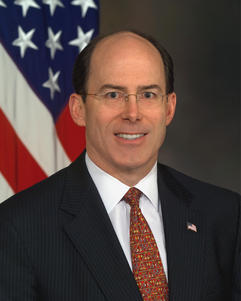 Domestic Nazi/DoD Inspector General Joseph Schmitz
JOSEPH SCHMITZ, A US GOVERNMENT OFFICIAL, SITS ON THE BOARD OF AN ADVERTISER AT AL MANAR
http://rfidtimes.blogspot.com/2005/12/
detecon-adds-three-seasoned-executives.html
 Joseph E. Schmitz - Chief Operating Officer & General Counsel
The Prince Group
Mr. Schmitz served as Inspector General of the Department of Defense from 2002 to 2005, having been nominated by the President and confirmed by the Senate. He now serves as the Chief Operating Officer & General Counsel of The Prince Group. His experience includes 27 years of naval service, both active and reserve, and serving as Special Assistant to the Attorney General of the United States, the Honorable Edwin Meese III, and as law clerk to the Honorable James L. Buckley, Circuit Judge, United States Court of Appeals for the District of Columbia Circuit. Mr. Schmitz' private-sector law practice focused on complex civil litigation, regulatory matters, international trade, administrative and constitutional law. He is a Young Leader Alumnus of the American Council on Germany, and a member of the SOVEREIGN MILITARY ORDER OF MALTA.
•••••••
DETECON - Deutschen Telepost Consulting GmbH
http://urbanlegends.about.com/
library/blxterror.htm
4,000 Jews, 1 Lie
TRACKING AN INTERNET HOAX
By Bryan Curtis
Oct. 5, 2001
[Addendum, Oct. 7, 4 p.m. ET: Osama Bin Laden essentially claimed credit for the Sept. 11 attacks in a statement recorded before Sunday's strikes on Afghanistan. "America was hit by God in one of its softest spots," he said. "If it continues with this policy [against Iraq and the PLO], the sons of Islam will not stop their struggle."]
It is an article of faith in many Muslim countries that Israel was behind the attack on the World Trade Center, with many citing as their evidence a "news report" that 4,000 Israelis called in sick from their jobs at the World Trade Center on Sept. 11. The allegation has now appeared on scores of Web sites and bulletin boards, has been reproduced in e-mails too numerous to count, and has run as fact in newspapers and news broadcasts in the Middle East. Where did this charge originate, and what path did it take around the world?
First, a question begs: Where did the precise figure of 4,000 Israelis come from? According to the Anti-Defamation League's Web site, on Sept. 11, the Israeli Embassy released a statement expressing concern about the 4,000 Israeli nationals living in New York City—few of whom actually worked in the World Trade Center. At press time, the embassy couldn't confirm this statement.
 According to Nexis and the Google search engine, the first mention of Israeli involvement in the attacks came in a Sept. 17 report on Lebanon's Al-Manar Television. The Los Angeles Times reports that the terrorist group Hezbollah has free access to Al-Manar's airwaves, and the station's Web site claims that the station exists to "stage an effective psychological warfare with the Zionist enemy."
The next day at 6:26 a.m., the American Web site Information Times published an article headlined "4,000 Jews Did Not Go To Work At WTC On Sept. 11," and credited it to an "AL-MANAR Television Special Investigative Report." This was not the first time that Information Times had pointed the finger at Israel. The day after the attacks, it warned in an article that the "terrorist government of Israel … cannot be ruled out" as a suspect. Information Times purports to be edited by Syed Adeeb from the eighth floor of the National Press Club at 549 15th St. NW, Washington, DC, 20045. The Press Club says it has no such tenant and repeated messages sent to the e-mail address for Syed Abeed listed on the site bounce back as undeliverable. Directory assistance for Washington, D.C., has no listing for Information Times.
•••••••
 DEUTSCHE, DETECON & AL MANAR TELEVISION
http://whatisthemessage.blogspot.com
/2005/10/terrorist-tv-and-its-corporate.html
Terrorist TV, and Its Corporate Sponsors
The Wall Street Journal
14 OCTOBER 2005
COMMENTARY: Advertising on Terror TV [Note: Paid subscription required.]
By MARK DUBOWITZ and ROBERTA BONAZZI
October 4, 2005
In one episode of the 29-part Ramadan special "Al-Shatat, The Diaspora," a rabbi orders his young son to kidnap a Christian friend so that his throat can be slit and the blood drained into a bedpan to be used to make food for Passover. The rest of the series tells the usual anti-Semitic plot of alleged Jewish aspirations for world domination. This TV show is just one example of the programming run by Hezbollah's global satellite channel, al-Manar. While the spread of this kind of hatred is despicable in any context, when it is broadcast to millions of viewers by terrorists intent on destroying lives, it becomes a weapon of global jihad.
Al-Manar routinely runs videos encouraging children to become suicide bombers, calls for terrorists to attack coalition soldiers in Iraq, and promises that "martyrs" will be rewarded in the afterlife.
Hezbollah established al-Manar in 1991 as an operational weapon to incite hatred and violence and recruit children and adults as terrorists. According to al-Manar officials interviewed by Hezbollah expert Avi Jorisch for his book "Beacon of Hatred," the station's programming is meant to "help people on the way to committing what you call in the West a suicide mission." Viewers are told: "The path to becoming a priest in Islam is through jihad," as Hezbollah's Secretary-General Hassan Nasrallah said in a speech on March 23, 2002. Every day al-Manar reaches millions of Arabic speakers in the Middle East, Europe and North Africa....
But two satellite companies continue to broadcast the station's programming: Arabsat, whose largest shareholder is the Saudi government, and Nilesat, which is majority-owned by the Egyptian government. The footprint of these two providers covers all of Europe, from Spain to southern Sweden and the Balkans. It extends to North Africa and the Middle East. As a result, Arabic speakers in Paris, London, Madrid and elsewhere continue to have access to a station that fosters a culture of terrorism 24 hours a day, seven days a week. As al-Manar's former chairman Nayef Krayem said, "There is no act of resistance that can be classified as terrorism." The European Union must pressure the Saudi and Egyptian governments to stop broadcasting this hatred to impressionable young Muslims in Europe.
That's the political part of the fight against al-Manar. But there is also a commercial side to it. While a large part of al-Manar's operating budget comes from Iran, a significant portion is derived from ad revenue. There are a handful of multinational corporations that still advertise on al-Manar, indirectly endorsing its message of hatred and violence and directly supporting its operations by paying for air time.
 Within the past few months, al-Manar broadcast ads for products from the following companies: Nissan, the Japanese car manufacturer; LG, the Korean electronics maker; Tefal, a producer of home cooking products and subsidiary of France-based Groupe SEB; Jovial, a manufacturer of Swiss watches; and Cellis-Alpha, a cellular SIM card provider owned by Fal Dete Telecommunications, a Saudi-German consortium majority-owned by DETECON, which in turn is a subsidiary of DEUTSCHE TELEKOM.
••••••
Detecon Al Saudia Co. Ltd
Saudi Arabia
 DETECON AL SAUDIA CO. LTD. (DETASAD) was established in 1982 as a Saudi-German company with kingdom-wide activities in the fields of Telecommunications. DETASAD has vast experience in all fields of Information Technology and Telecommunication (ITC), i.e. Management Consultancy, Engineering, Planning, Project Management, and Operation and Maintenance. DETASAD's broadband IP VSAT network system offers IP services over satellite, such as exchange of data, voice over satellite, and broadcast of video applications. The easy to operate system uses small antennas (0.9m) and high sophisticated modems.
•••••••
http://findarticles.com/p/articles/mi_
m3457/is_n41_v16/ai_21232654
German consultant launches U.S. subsidiary - Detecon Deutsche Telepost Cnsulting; Detecon Inc.
Detecon Deutsche Telepost Consulting has launched its U.S. subsidiary, Detecon Inc., with headquarters in RESTON, VA. ...
•••••••
ANTI-SEMITIC SERIES ON AL MANAR TELEVISION
http://www.pmw.org.il/tv%20Al-Shatat.html
"The Diaspora" [Al-Shatat]
The Diaspora [Al-Shatat], the Syrian-produced series aired last year during the Ramadan on Al-Manar (Hizbollah TV) is now being aired on Iranian TV. The series covers the period of the Zionist movement, and is primarily a depiction of the classic anti-Semitic libel that attributes to Jews the desire for world domination. The series revolves around the "Secret Jewish World Government," whose members meet and plan how to use their control and influence over the leaders of the world to direct all of history. ....
"Secret Jewish Government" plans the dropping of Atomic Bomb on Japan ...
•••••••
NAZI CONNECTIONS TO 9/11 - THE SCHMITZ BROTHERS
THE SCHMITZ FAMILY TREE
http://en.wikipedia.org/wiki/Joseph_E._Schmitz
Joseph Edward Schmitz is the son of the late John G. Schmitz, former California State Senator, Member of the U.S. House of Representatives, and U.S. Presidential candidate (1972). John Schmitz was famous for his right-wing views and occasional racist and homophobic remarks. His public career was ended when it was revealed that he had an affair and fathered two illegitimate children. John Schmitz's seven legitimate children include former George H.W. Bush White House counsel John P. Schmitz, Jerome T. Schmitz, Theresa Manion, Elizabeth Crnkovich, Philip Schmitz (who tragically drowned as a baby in the family pool), child rapist Mary Kay Letourneau, and Joseph Edward Schmitz.
SCHMITZ CLAN INTERMARRIED WITH THE BUSH FAMILY
http://www.spitfirelist.com/f533.html
Jeb married a Mexican woman. Columba Bush’s sister is married to John P. Schmitz, a beneficiary of the fellowship programs subsumed under the Carl Duisberg Gesellschaft and the brother of Joseph Schmitz, currently the head of the Blackwater security outfit. John P. Schmitz has close links to the elder George Bush, the 9/11 milieu...
JW has filed suit seeking the Administration’s anthrax documents to ascertain why the White House starting taking heavy doses of Cipro on the day of the attacks—nearly a month before anthrax was even discovered on Capitol Hill, and while postal workers continued to sort mail in contaminated offices—some dying in the process.”
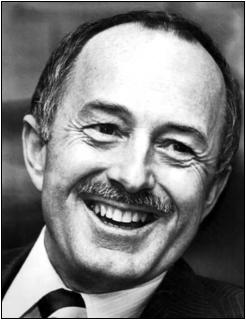
JOHN G. SCHMITZ -
BIRCH SOCIETY NATIONAL DIRECTOR
http://www.arlingtoncemetery.net/jgschmitz.htm
... when the county's longtime conservative Rep. James B. Utt died and local Republicans needed a successor, Schmitz--by then a national director of the ultraconservative John Birch Society -- was a natural choice. Over time, he lost the support of the John Birch Society, which found him too conservative and dismissed him from its national council in 1982. Earlier, he had said he joined the society "to do something to get the middle-of-the-road vote in Orange County."
BIZARRE SEXUAL PERVERSIONS
http://72.14.209.104/search?q=cache:NAraNorh2JcJ:p216.ezboard.com
/frigorousintuitionfrm10.showMessage%3FtopicID%3D2151.topic
+%22JOHN+P.+SCHMITZ%22+SCANDAL&hl=en&gl=us&ct=clnk&cd=4
One of the strangest episodes in Schmitz’s saga concerns a second family he raised by his German (!) mistress. A young boy conceived in that relationship appears to have been sexually mutilated. “But the man who saw conspiracies everywhere, who was an equal opportunity bigot, and who decried America’s moral decrepitude, had, himself, a skeleton in the closet. It came to light in a curious way. An Orange County child abuse case in 1982 concerned a thirteen-month-old infant who was discovered with hair so tightly wound around his penis that the organ had nearly been severed. The baby was placed in protective custody, and the court demanded that the father step forward. It turned out to be none other than John G. Schmitz, now again a state senator, paterfamilias of five children and, er, two others with his German mistress, once his student at Santa Ana. It marked the end of Schmitz’s political career (although he did attempt to run for Congress once more). The charges against the mother were eventually dropped and the infant restored to her care. But it was never explained what was going on with the hair-wound penis. One historian has suggested that it was a ‘mysterious sex—or probably anti-sex ritual . . . as if a chastity device.’ Schmitz, feisty as ever, remarked, ‘I ought to get the Right to Life man-of-the-year award for this.’”
IRAN-CONTRA
http://delong.typepad.com/sdj/2006/03/the_entire_cato.html
John Schmitz was the father of the Bush I aide most involved in Iran-Contra, John P. Schmitz, who refused to testify before the Walsh Commission ...
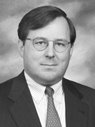
IS JOHN P. SCHMITZ A KEY PLAYER IN 9/11?
http://www.voxfux.com/articles(closed)/00000010.htm
... Some may remember Schmitz from the Iran/contra investigation, when the Office of the Independent Counsel (OIC) reported that each witness interviewed regarding document production complied except for Schmitz, who asserted that his documents were privileged work product.
Schmitz, fluent in German and a Partner in global-law firm Mayer, Brown & Platt, has clients that include Bayer AG, German maker of the antibiotic Cipro, which fights Anthrax, about which Larry Klayman and Judicial Watch (JW) will have keen interest. Recently, JW filed suit seeking the administration’s anthrax documents to ascertain why the White House starting taking heavy doses of Cipro the day of the attacks -- nearly a month before anthrax was even discovered on Capitol Hill, and while postal workers continued to sort mail in contaminated offices -- some dying in the process.
But John Schmitz’s Mayer-Brown profile also reveals that he represents Enron, adding that “we were active in Germany [with Enron] until the end....It [bankruptcy] surprised me as well as anyone else,” according to Reuters (1-4-2002). Moreover, Mayer-Brown also represents Deutschebank on a regular basis regarding its electronic commerce activities; and curiously, Schmitz’s law firm maintains an office in Tashkent, Uzbekistan along with Enron -- if only to make sure oil is well in the Caspian Sea basin.
Even many 9/11 victim families will even come to recognize Mayer-Brown; for conveniently, the firm also happens to represent United Airlines against 9/11 family lawyers Mary Schiavo and Donald Nolan. And given partner John P. Schmitz’s close former relationships with the Bush family, Mayer-Brown’s many water coolers may become intriguing conduits when Miss Schiavo and Mr. Nolan begin their respective legal discovery initiatives regarding who will be subpoenaed or deposed and what evidence is or is not revealed.
Michael Feagley, a Mayer-Brown lead attorney in more than 35 jury and bench trials, and evidentiary hearings, is a recognized expert in witness testimony and evidence. And like 9/11 Victim Compensation Fund Special Master Kenneth Feinberg, Feagley is an also an authority on alternative dispute resolution techniques - the art of bringing parties together to compromise in legal disputes. His law firm biography lists the art of avoidance of and preparation for potential future litigation as an additional key area of expertise.
Mayer-Brown’s website also lists a connection to President Bush’s family, in that one of its partners, John P. Schmitz, personally represents and lobbies for both Enron and Bayer AG, while also sitting on the Trustee Board of Bayer Foundation. Moreover, Schmitz, fluent in German, was White House Deputy Counsel when George H. W. Bush was both President and Vice President, making the story’s legs that much more interesting.
JOHN P. SCHMITZ PROFILE
Employment - Mayer, Brown, Rowe & Maw LLP, Washington, D.C., 1993 to date • Deputy Counsel to President George Bush, The White House,Washington, D.C., 1989-1993 • Deputy Counsel to Vice President George Bush, Office of the Vice President, The White House, Washington, D.C., 1985-1989 • Wilmer, Cutler & Pickering, Washington, D.C., 1984-1985 • Robert Bosch Foundation Fellowship, Office of Bundestag Member Matthias Wissmann, Bonn, and Office of General Counsel, Robert Bosch, GmbH, Stuttgart, Germany • Law Clerk to The Honorable Antonin Scalia, U.S. Court of Appeals for the District of Columbia, Washington, D.C., 1983-1984 • Research Fellow, Environmental Quality Lab, California Institute of Technology, Pasadena, CA, 1982-1983 • Special Assistant to William Baxter, Assistant Attorney General for Antitrust, U.S. Department of Justice, Washington, D.C., 1981-1982 • Research Assistant to Professors John Ferejohn and Morris Fiorina, Pasadena, CA, and London, England, 1978-1980 • Legislative Assistant to Goodloe E. Byron, Member of Congress, Washington, D.C., 1977 • Legislative Aide to Charles W. Sandman, Jr., Member of Congress, Washington, D.C., 1973-1975.
Education
Stanford Law School, J.D., 1981; Stanford Foundation for Law and Economic Policy, founding member; Stanford Law Review • California Institute of Technology, M.S., Economics, 1978; Completed all coursework and exams toward Ph.D • Georgetown University, B.A. magna cum laude, 1976; Phi Beta Kappa; Dobriansky Fellowship
Languages
German (fluent)
JOHN P. SCHMITZ, MAYER-BROWN, ANTHRAX, BEN VENISTE, ETC.
http://www.parapolitics.info/phorum/read.php?f=31&i=409&t=409
Mayer-Brown also has clients that include Bayer AG (German maker of the antibiotic Cipro which fights Anthrax, about which Larry Klayman and Judicial Watch (JW) will have keen interest.
JW has filed suit seeking the Administration’s anthrax documents to ascertain why the White House starting taking heavy doses of Cipro on the day of the attacks -- nearly a month before anthrax was even discovered on Capitol Hill, and while postal workers continued to sort mail in contaminated offices -- some dying in the process.
John Schmitz’s Mayer-Brown profile also reveals that he represented Enron, adding that “we were active in Germany [with Enron] until the end....It [bankruptcy] surprised me as well as anyone else,” according to Reuters (1-4-2002).
Moreover, Mayer-Brown also represents Deutsche Bank on a regular basis regarding its electronic commerce activities; and curiously, Schmitz’s law firm maintains an office in Tashkent, Uzbekistan, along with Enron -- if only to make sure oil is well in the Caspian Sea basin.
And Deutsche Bank is knee-deep in pre-9/11 insider trading stock profits. Enough said.
Ben Veniste, for his part, was very cordial to us, even as we asked him about his recusing himself from participating in writing airline safety recommendations relative to his firm’s representation of United Airlines: “I have already addressed the conflict of interest issue.”
Real answers, however, about how serious Ben Veniste and other Commissioners are regarding their quest for 9/11 truth will come when it is learned which key administration players will testify and whether their subpoenas will be served “by consensus,” -- to which Senator John McCain had referred during his Thursday morning testimony -- or whether subpoenas will center along political party battle-lines. This, while also addressing issues of openness and public sunshine.
MOHAMMED ATTA
http://www.scoop.co.nz/stories/HL0207/S00097.htm
Mayer-Brown is a powerhouse multinational firm, with offices in numerous Western European countries and the United States. Interestingly, its website lists such clients as Enron Corporation, both of whom maintain offices in the Caspian Sea basin in Tashkent, Uzbekistan - near Afghanistan; German corporation Bayer AG - maker of cipro, the antibiotic used to treat anthrax; and German banking giant, Deutsche Bank, for electronic commerce activities. According to wide reports, two of the September 11 terrorist hijackers maintained bank accounts at Deutsche Bank, including leader Mohammed Atta.
WILMER CUTLER & PICKERING
http://www.spitfirelist.com/f530.html
[John P.] Schmitz was a beneficiary of the Robert Bosch Foundation Fellowship, a subsidiary program (along with the Alfa Fellowship) of the Carl Duisberg Gesellschaft. When working with the Bundestag, Schmitz worked with Mathias Wissman, the former treasurer of the CDU! Later, Wissman went to work for Wilmer Cutler & Pickering, a law firm that also employed Schmitz and that represents key German government-linked corporations in their attempts to move into American markets.
JP. SCHMIDT'S LOBBYING INCOME
John Patrick Schmitz
Occupation: Lobbyist
Employer: Mayer Brown Rowe & Maw
Home: McLean, VA
John P. Schmitz is a Washington lobbyist who reported $1.6 million in lobby income in 2002 from five corporate clients led by the U.S. Chamber of Commerce, Lockheed Martin and RxHub—an electronic prescription service formed by leading drug-benefits companies. Schmitz co-chairs the U.S. Chamber’s Federalism Initiative, which promotes legal limits on the damages that businesses must pay when they harm workers, consumers or communities.
JOSEPH E. SCHMITZ A KNIGHT OF MALTA
http://www.defenselink.mil/bios/schmitz_bio.html
He is a Young Leader Alumnus of the American Council on Germany, and a member of the Sovereign Military Order of Malta.
FEDERALIST SOCIETY
http://www.waynemadsenreport.com/september26-30.htm
Joseph Schmitz is active in the Washington Lawyers' Chapter of the right-wing Federalist Society, the same group with which the new Chief Justice John G. Roberts was affiliated.
BUSH APPOINTS JOSEPH SCHMITZ AS IG AT THE PENTAGON UNDER RUMSFELD
http://www.telegraph.co.uk/news/main.jh./...
"President Bush nominated Joseph E. Schmitz to be the Inspector General"
CLERKED FOR JAMES L. BUCKLEY
http://www.answers.com/topic/joseph-e-schmitz
He clerked with James L. Buckley [President of Radio Free Europe/Radio Liberty, Inc. 1982-1985], Circuit Judge, United States Court of Appeals for the District of Columbia Circuit ...
SCHMITZ & PATTON BOGGS
http://www.defenselink.mil/bios/schmitz_bio.html From 1987 to 2002, Mr. Schmitz' private-sector law practice focused on complex civil litigation, aviation regulatory matters, international trade, administrative law, and constitutional appellate litigation, most recently as a partner at PATTON BOGGS LLP.
His prior public service includes: 27 years of naval service, first on active duty and then as a reserve officer, attaining the rank of Captain; Special Assistant to the Attorney General of the United States, Honorable Edwin Meese III
SCHMITZ COULD BE COUNTED ON TO KEEP HIS MOUTH SHUT
http://www.ocweekly.com/columns/a-clockwork-orange/
a-clockwork-orange/14543/
"Schmitz was appointed to his post by President Bush in 2001 after the Associated Press reported the office 'was caught cheating' and destroying internal documents. His office has broad jurisdiction to investigate all Pentagon contracts, both in Iraq and elsewhere. But judging by Schmitz's qualifications, the White House had one thing in mind when it appointed him: political loyalty.
HIS PERFORMANCE AT DOD
http://www.epic-usa.org/Default.aspx?tabid=1858
When Joseph E. Schmitz took over as the Pentagon's inspector general in 2002, the largest watchdog organization in the federal government was under fire for failing to fully investigate a senior official, falsifying internal documents and mistreating whistle-blowers.... Schmitz slowed or blocked investigations of senior Bush administration officials ...
BLOCKED AN INVESTIGATION
OF EDWARD "PETE" ALDRIDGE AT LOCKHEED
http://www.epic-usa.org/Default.aspx?tabid=1858
Another case in which Schmitz intervened came when the inspector general's office began examining the jobs received by Pentagon officials who left for the private sector, according to another U.S. official, who also declined to be identified because of the sensitivity of the issue. One of those on the list was Edward "Pete" Aldridge, the former Pentagon procurement chief who took a job with defense contractor Lockheed Martin. Schmitz would not sign a subpoena allowing investigators to examine employment documents, the official said. Instead, the official said that Schmitz created a new policy that made it more difficult to get information by subpoena by requiring additional bureaucratic steps. During his tenure, Schmitz also made it harder to initiate an investigation of a political appointee, requiring high-ranking approval before investigators could proceed. A Lockheed Martin spokesman confirmed the company had received a request that the firm "voluntarily provide" information regarding Aldridge. It said it had "promptly and fully" responded to the request....
JOSEPH SCHMITZ RESIGNS ...
http://fairuse.1accesshost.com/news3/latimes137.html
... The resignation comes after Sen. Charles E. Grassley (R-Iowa) sent Schmitz several letters this summer informing him that he was the focus of a congressional inquiry into whether he had blocked two criminal investigations last year....
... AND TAKES A JOB AT BLACKWATER USA
http://www.nola.com/newsflash/washington/index.ssf?/base/politics-10/1149551367250790.xml&storylist=washington
Joseph E. Schmitz, who resigned last September to become chief operating officer for the Prince Group, a division of Blackwater USA, which provides security services to troops in Iraq and around the globe.
ABOUT BLACKWATER & THE PRINCE GROUP
http://www.waynemadsenreport.com/september26-30.htm
Blackwater maintains the largest private military training facility in the United States.... Blackwater's CEO and co-founder is Michigan-based Erik D. Prince, an ex-US Navy SEAL, an heir to an automobile parts corporate fortune, a former intern for President George H. W. Bush, and a contributor to such right wing Republicans as recently indicted Tom DeLay. Prince also has strong political links to Sen. Rick Santorum of Pennsylvania, Family Research Council President Tony Perkins, one-time GOP presidential candidate Gary Bauer, a political action committee called "Restoring the American Dream," (whose board of directors included Mississippi Governor Haley Barbour, Robert Bork, former Rep. Steve Largent, Domino's Pizza founder Thomas Monaghan.... Blackwater is far removed from oversight by government inspectors general, Freedom of Information Act requests, the Government Accountability Office (GAO), and snooping reporters.
 Joseph E. Schmitz, appointed to the Detecon Advisory Board
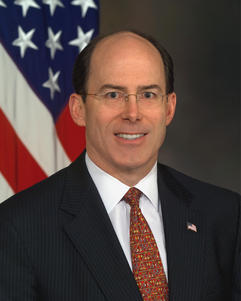 Domestic Nazi/DoD Inspector General Joseph Schmitz
JOSEPH SCHMITZ, A US GOVERNMENT OFFICIAL, SITS ON THE BOARD OF AN ADVERTISER AT AL MANAR
http://rfidtimes.blogspot.com/2005/12/
detecon-adds-three-seasoned-executives.html
 Joseph E. Schmitz - Chief Operating Officer & General Counsel
 The Prince Group
Mr. Schmitz served as Inspector General of the Department of Defense from 2002 to 2005, having been nominated by the President and confirmed by the Senate. He now serves as the Chief Operating Officer & General Counsel of The Prince Group. His experience includes 27 years of naval service, both active and reserve, and serving as Special Assistant to the Attorney General of the United States, the Honorable Edwin Meese III, and as law clerk to the Honorable James L. Buckley, Circuit Judge, United States Court of Appeals for the District of Columbia Circuit. Mr. Schmitz' private-sector law practice focused on complex civil litigation, regulatory matters, international trade, administrative and constitutional law. He is a Young Leader Alumnus of the American Council on Germany, and a member of the SOVEREIGN MILITARY ORDER OF MALTA.
•••••••
DETECON - Deutschen Telepost Consulting GmbH
http://urbanlegends.about.com/
library/blxterror.htm
4,000 Jews, 1 Lie
TRACKING AN INTERNET HOAX
By Bryan Curtis
Oct. 5, 2001
[Addendum, Oct. 7, 4 p.m. ET: Osama Bin Laden essentially claimed credit for the Sept. 11 attacks in a statement recorded before Sunday's strikes on Afghanistan. "America was hit by God in one of its softest spots," he said. "If it continues with this policy [against Iraq and the PLO], the sons of Islam will not stop their struggle."]
It is an article of faith in many Muslim countries that Israel was behind the attack on the World Trade Center, with many citing as their evidence a "news report" that 4,000 Israelis called in sick from their jobs at the World Trade Center on Sept. 11. The allegation has now appeared on scores of Web sites and bulletin boards, has been reproduced in e-mails too numerous to count, and has run as fact in newspapers and news broadcasts in the Middle East. Where did this charge originate, and what path did it take around the world?
First, a question begs: Where did the precise figure of 4,000 Israelis come from? According to the Anti-Defamation League's Web site, on Sept. 11, the Israeli Embassy released a statement expressing concern about the 4,000 Israeli nationals living in New York City—few of whom actually worked in the World Trade Center. At press time, the embassy couldn't confirm this statement.
 According to Nexis and the Google search engine, the first mention of Israeli involvement in the attacks came in a Sept. 17 report on Lebanon's Al-Manar Television. The Los Angeles Times reports that the terrorist group Hezbollah has free access to Al-Manar's airwaves, and the station's Web site claims that the station exists to "stage an effective psychological warfare with the Zionist enemy."
The next day at 6:26 a.m., the American Web site Information Times published an article headlined "4,000 Jews Did Not Go To Work At WTC On Sept. 11," and credited it to an "AL-MANAR Television Special Investigative Report." This was not the first time that Information Times had pointed the finger at Israel. The day after the attacks, it warned in an article that the "terrorist government of Israel … cannot be ruled out" as a suspect. Information Times purports to be edited by Syed Adeeb from the eighth floor of the National Press Club at 549 15th St. NW, Washington, DC, 20045. The Press Club says it has no such tenant and repeated messages sent to the e-mail address for Syed Abeed listed on the site bounce back as undeliverable. Directory assistance for Washington, D.C., has no listing for Information Times.
•••••••
 DEUTSCHE, DETECON & AL MANAR TELEVISION
http://whatisthemessage.blogspot.com
/2005/10/terrorist-tv-and-its-corporate.html
Terrorist TV, and Its Corporate Sponsors
The Wall Street Journal
14 OCTOBER 2005
COMMENTARY: Advertising on Terror TV [Note: Paid subscription required.]
By MARK DUBOWITZ and ROBERTA BONAZZI
October 4, 2005
In one episode of the 29-part Ramadan special "Al-Shatat, The Diaspora," a rabbi orders his young son to kidnap a Christian friend so that his throat can be slit and the blood drained into a bedpan to be used to make food for Passover. The rest of the series tells the usual anti-Semitic plot of alleged Jewish aspirations for world domination. This TV show is just one example of the programming run by Hezbollah's global satellite channel, al-Manar. While the spread of this kind of hatred is despicable in any context, when it is broadcast to millions of viewers by terrorists intent on destroying lives, it becomes a weapon of global jihad.
Al-Manar routinely runs videos encouraging children to become suicide bombers, calls for terrorists to attack coalition soldiers in Iraq, and promises that "martyrs" will be rewarded in the afterlife.
Hezbollah established al-Manar in 1991 as an operational weapon to incite hatred and violence and recruit children and adults as terrorists. According to al-Manar officials interviewed by Hezbollah expert Avi Jorisch for his book "Beacon of Hatred," the station's programming is meant to "help people on the way to committing what you call in the West a suicide mission." Viewers are told: "The path to becoming a priest in Islam is through jihad," as Hezbollah's Secretary-General Hassan Nasrallah said in a speech on March 23, 2002. Every day al-Manar reaches millions of Arabic speakers in the Middle East, Europe and North Africa....
But two satellite companies continue to broadcast the station's programming: Arabsat, whose largest shareholder is the Saudi government, and Nilesat, which is majority-owned by the Egyptian government. The footprint of these two providers covers all of Europe, from Spain to southern Sweden and the Balkans. It extends to North Africa and the Middle East. As a result, Arabic speakers in Paris, London, Madrid and elsewhere continue to have access to a station that fosters a culture of terrorism 24 hours a day, seven days a week. As al-Manar's former chairman Nayef Krayem said, "There is no act of resistance that can be classified as terrorism." The European Union must pressure the Saudi and Egyptian governments to stop broadcasting this hatred to impressionable young Muslims in Europe.
That's the political part of the fight against al-Manar. But there is also a commercial side to it. While a large part of al-Manar's operating budget comes from Iran, a significant portion is derived from ad revenue. There are a handful of multinational corporations that still advertise on al-Manar, indirectly endorsing its message of hatred and violence and directly supporting its operations by paying for air time.
 Within the past few months, al-Manar broadcast ads for products from the following companies: Nissan, the Japanese car manufacturer; LG, the Korean electronics maker; Tefal, a producer of home cooking products and subsidiary of France-based Groupe SEB; Jovial, a manufacturer of Swiss watches; and Cellis-Alpha, a cellular SIM card provider owned by Fal Dete Telecommunications, a Saudi-German consortium majority-owned by DETECON, which in turn is a subsidiary of DEUTSCHE TELEKOM.
••••••
Detecon Al Saudia Co. Ltd
Saudi Arabia
 DETECON AL SAUDIA CO. LTD. (DETASAD) was established in 1982 as a Saudi-German company with kingdom-wide activities in the fields of Telecommunications. DETASAD has vast experience in all fields of Information Technology and Telecommunication (ITC), i.e. Management Consultancy, Engineering, Planning, Project Management, and Operation and Maintenance. DETASAD's broadband IP VSAT network system offers IP services over satellite, such as exchange of data, voice over satellite, and broadcast of video applications. The easy to operate system uses small antennas (0.9m) and high sophisticated modems.
•••••••
http://findarticles.com/p/articles/mi_
m3457/is_n41_v16/ai_21232654
German consultant launches U.S. subsidiary - Detecon Deutsche Telepost Cnsulting; Detecon Inc.
Detecon Deutsche Telepost Consulting has launched its U.S. subsidiary, Detecon Inc., with headquarters in RESTON, VA. ...
•••••••
ANTI-SEMITIC SERIES ON AL MANAR TELEVISION
http://www.pmw.org.il/tv%20Al-Shatat.html
"The Diaspora" [Al-Shatat]
The Diaspora [Al-Shatat], the Syrian-produced series aired last year during the Ramadan on Al-Manar (Hizbollah TV) is now being aired on Iranian TV. The series covers the period of the Zionist movement, and is primarily a depiction of the classic anti-Semitic libel that attributes to Jews the desire for world domination. The series revolves around the "Secret Jewish World Government," whose members meet and plan how to use their control and influence over the leaders of the world to direct all of history. ....
"Secret Jewish Government" plans the dropping of Atomic Bomb on Japan ...
•••••••
NAZI CONNECTIONS TO 9/11 - THE SCHMITZ BROTHERS
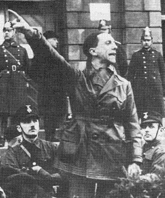
THE SCHMITZ FAMILY TREE
http://en.wikipedia.org/wiki/Joseph_E._Schmitz
Joseph Edward Schmitz is the son of the late John G. Schmitz, former California State Senator, Member of the U.S. House of Representatives, and U.S. Presidential candidate (1972). John Schmitz was famous for his right-wing views and occasional racist and homophobic remarks. His public career was ended when it was revealed that he had an affair and fathered two illegitimate children. John Schmitz's seven legitimate children include former George H.W. Bush White House counsel John P. Schmitz, Jerome T. Schmitz, Theresa Manion, Elizabeth Crnkovich, Philip Schmitz (who tragically drowned as a baby in the family pool), child rapist Mary Kay Letourneau, and Joseph Edward Schmitz.
SCHMITZ CLAN INTERMARRIED WITH THE BUSH FAMILY
http://www.spitfirelist.com/f533.html
Jeb married a Mexican woman. Columba Bush’s sister is married to John P. Schmitz, a beneficiary of the fellowship programs subsumed under the Carl Duisberg Gesellschaft and the brother of Joseph Schmitz, currently the head of the Blackwater security outfit. John P. Schmitz has close links to the elder George Bush, the 9/11 milieu...
JW has filed suit seeking the Administration’s anthrax documents to ascertain why the White House starting taking heavy doses of Cipro on the day of the attacks—nearly a month before anthrax was even discovered on Capitol Hill, and while postal workers continued to sort mail in contaminated offices—some dying in the process.”
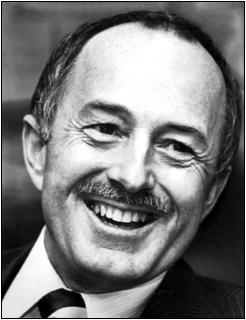
JOHN G. SCHMITZ -
BIRCH SOCIETY NATIONAL DIRECTOR
http://www.arlingtoncemetery.net/jgschmitz.htm
... when the county's longtime conservative Rep. James B. Utt died and local Republicans needed a successor, Schmitz--by then a national director of the ultraconservative John Birch Society -- was a natural choice. Over time, he lost the support of the John Birch Society, which found him too conservative and dismissed him from its national council in 1982. Earlier, he had said he joined the society "to do something to get the middle-of-the-road vote in Orange County."
BIZARRE SEXUAL PERVERSIONS
http://72.14.209.104/search?q=cache:NAraNorh2JcJ:p216.ezboard.com
/frigorousintuitionfrm10.showMessage%3FtopicID%3D2151.topic
+%22JOHN+P.+SCHMITZ%22+SCANDAL&hl=en&gl=us&ct=clnk&cd=4
One of the strangest episodes in Schmitz’s saga concerns a second family he raised by his German (!) mistress. A young boy conceived in that relationship appears to have been sexually mutilated. “But the man who saw conspiracies everywhere, who was an equal opportunity bigot, and who decried America’s moral decrepitude, had, himself, a skeleton in the closet. It came to light in a curious way. An Orange County child abuse case in 1982 concerned a thirteen-month-old infant who was discovered with hair so tightly wound around his penis that the organ had nearly been severed. The baby was placed in protective custody, and the court demanded that the father step forward. It turned out to be none other than John G. Schmitz, now again a state senator, paterfamilias of five children and, er, two others with his German mistress, once his student at Santa Ana. It marked the end of Schmitz’s political career (although he did attempt to run for Congress once more). The charges against the mother were eventually dropped and the infant restored to her care. But it was never explained what was going on with the hair-wound penis. One historian has suggested that it was a ‘mysterious sex—or probably anti-sex ritual . . . as if a chastity device.’ Schmitz, feisty as ever, remarked, ‘I ought to get the Right to Life man-of-the-year award for this.’”
IRAN-CONTRA
http://delong.typepad.com/sdj/2006/03/the_entire_cato.html
John Schmitz was the father of the Bush I aide most involved in Iran-Contra, John P. Schmitz, who refused to testify before the Walsh Commission ...
IS JOHN P. SCHMITZ A KEY PLAYER IN 9/11?
http://www.voxfux.com/articles(closed)/00000010.htm
... Some may remember Schmitz from the Iran/contra investigation, when the Office of the Independent Counsel (OIC) reported that each witness interviewed regarding document production complied except for Schmitz, who asserted that his documents were privileged work product.
Schmitz, fluent in German and a Partner in global-law firm Mayer, Brown & Platt, has clients that include Bayer AG, German maker of the antibiotic Cipro, which fights Anthrax, about which Larry Klayman and Judicial Watch (JW) will have keen interest. Recently, JW filed suit seeking the administration’s anthrax documents to ascertain why the White House starting taking heavy doses of Cipro the day of the attacks -- nearly a month before anthrax was even discovered on Capitol Hill, and while postal workers continued to sort mail in contaminated offices -- some dying in the process.
But John Schmitz’s Mayer-Brown profile also reveals that he represents Enron, adding that “we were active in Germany [with Enron] until the end....It [bankruptcy] surprised me as well as anyone else,” according to Reuters (1-4-2002). Moreover, Mayer-Brown also represents Deutschebank on a regular basis regarding its electronic commerce activities; and curiously, Schmitz’s law firm maintains an office in Tashkent, Uzbekistan along with Enron -- if only to make sure oil is well in the Caspian Sea basin.
Even many 9/11 victim families will even come to recognize Mayer-Brown; for conveniently, the firm also happens to represent United Airlines against 9/11 family lawyers Mary Schiavo and Donald Nolan. And given partner John P. Schmitz’s close former relationships with the Bush family, Mayer-Brown’s many water coolers may become intriguing conduits when Miss Schiavo and Mr. Nolan begin their respective legal discovery initiatives regarding who will be subpoenaed or deposed and what evidence is or is not revealed.
Michael Feagley, a Mayer-Brown lead attorney in more than 35 jury and bench trials, and evidentiary hearings, is a recognized expert in witness testimony and evidence. And like 9/11 Victim Compensation Fund Special Master Kenneth Feinberg, Feagley is an also an authority on alternative dispute resolution techniques - the art of bringing parties together to compromise in legal disputes. His law firm biography lists the art of avoidance of and preparation for potential future litigation as an additional key area of expertise.
Mayer-Brown’s website also lists a connection to President Bush’s family, in that one of its partners, John P. Schmitz, personally represents and lobbies for both Enron and Bayer AG, while also sitting on the Trustee Board of Bayer Foundation. Moreover, Schmitz, fluent in German, was White House Deputy Counsel when George H. W. Bush was both President and Vice President, making the story’s legs that much more interesting.
JOHN P. SCHMITZ PROFILE
Employment - Mayer, Brown, Rowe & Maw LLP, Washington, D.C., 1993 to date • Deputy Counsel to President George Bush, The White House,Washington, D.C., 1989-1993 • Deputy Counsel to Vice President George Bush, Office of the Vice President, The White House, Washington, D.C., 1985-1989 • Wilmer, Cutler & Pickering, Washington, D.C., 1984-1985 • Robert Bosch Foundation Fellowship, Office of Bundestag Member Matthias Wissmann, Bonn, and Office of General Counsel, Robert Bosch, GmbH, Stuttgart, Germany • Law Clerk to The Honorable Antonin Scalia, U.S. Court of Appeals for the District of Columbia, Washington, D.C., 1983-1984 • Research Fellow, Environmental Quality Lab, California Institute of Technology, Pasadena, CA, 1982-1983 • Special Assistant to William Baxter, Assistant Attorney General for Antitrust, U.S. Department of Justice, Washington, D.C., 1981-1982 • Research Assistant to Professors John Ferejohn and Morris Fiorina, Pasadena, CA, and London, England, 1978-1980 • Legislative Assistant to Goodloe E. Byron, Member of Congress, Washington, D.C., 1977 • Legislative Aide to Charles W. Sandman, Jr., Member of Congress, Washington, D.C., 1973-1975.
Education
Stanford Law School, J.D., 1981; Stanford Foundation for Law and Economic Policy, founding member; Stanford Law Review • California Institute of Technology, M.S., Economics, 1978; Completed all coursework and exams toward Ph.D • Georgetown University, B.A. magna cum laude, 1976; Phi Beta Kappa; Dobriansky Fellowship
Languages
German (fluent)
JOHN P. SCHMITZ, MAYER-BROWN, ANTHRAX, BEN VENISTE, ETC.
http://www.parapolitics.info/phorum/read.php?f=31&i=409&t=409
Mayer-Brown also has clients that include Bayer AG (German maker of the antibiotic Cipro which fights Anthrax, about which Larry Klayman and Judicial Watch (JW) will have keen interest.
JW has filed suit seeking the Administration’s anthrax documents to ascertain why the White House starting taking heavy doses of Cipro on the day of the attacks -- nearly a month before anthrax was even discovered on Capitol Hill, and while postal workers continued to sort mail in contaminated offices -- some dying in the process.
John Schmitz’s Mayer-Brown profile also reveals that he represented Enron, adding that “we were active in Germany [with Enron] until the end....It [bankruptcy] surprised me as well as anyone else,” according to Reuters (1-4-2002).
Moreover, Mayer-Brown also represents Deutsche Bank on a regular basis regarding its electronic commerce activities; and curiously, Schmitz’s law firm maintains an office in Tashkent, Uzbekistan, along with Enron -- if only to make sure oil is well in the Caspian Sea basin.
And Deutsche Bank is knee-deep in pre-9/11 insider trading stock profits. Enough said.
Ben Veniste, for his part, was very cordial to us, even as we asked him about his recusing himself from participating in writing airline safety recommendations relative to his firm’s representation of United Airlines: “I have already addressed the conflict of interest issue.”
Real answers, however, about how serious Ben Veniste and other Commissioners are regarding their quest for 9/11 truth will come when it is learned which key administration players will testify and whether their subpoenas will be served “by consensus,” -- to which Senator John McCain had referred during his Thursday morning testimony -- or whether subpoenas will center along political party battle-lines. This, while also addressing issues of openness and public sunshine.
MOHAMMED ATTA
http://www.scoop.co.nz/stories/HL0207/S00097.htm
Mayer-Brown is a powerhouse multinational firm, with offices in numerous Western European countries and the United States. Interestingly, its website lists such clients as Enron Corporation, both of whom maintain offices in the Caspian Sea basin in Tashkent, Uzbekistan - near Afghanistan; German corporation Bayer AG - maker of cipro, the antibiotic used to treat anthrax; and German banking giant, Deutsche Bank, for electronic commerce activities. According to wide reports, two of the September 11 terrorist hijackers maintained bank accounts at Deutsche Bank, including leader Mohammed Atta.
WILMER CUTLER & PICKERING
http://www.spitfirelist.com/f530.html
[John P.] Schmitz was a beneficiary of the Robert Bosch Foundation Fellowship, a subsidiary program (along with the Alfa Fellowship) of the Carl Duisberg Gesellschaft. When working with the Bundestag, Schmitz worked with Mathias Wissman, the former treasurer of the CDU! Later, Wissman went to work for Wilmer Cutler & Pickering, a law firm that also employed Schmitz and that represents key German government-linked corporations in their attempts to move into American markets.
JP. SCHMIDT'S LOBBYING INCOME
John Patrick Schmitz
Occupation: Lobbyist
Employer: Mayer Brown Rowe & Maw
Home: McLean, VA
John P. Schmitz is a Washington lobbyist who reported $1.6 million in lobby income in 2002 from five corporate clients led by the U.S. Chamber of Commerce, Lockheed Martin and RxHub—an electronic prescription service formed by leading drug-benefits companies. Schmitz co-chairs the U.S. Chamber’s Federalism Initiative, which promotes legal limits on the damages that businesses must pay when they harm workers, consumers or communities.
JOSEPH E. SCHMITZ A KNIGHT OF MALTA
http://www.defenselink.mil/bios/schmitz_bio.html
He is a Young Leader Alumnus of the American Council on Germany, and a member of the Sovereign Military Order of Malta.
FEDERALIST SOCIETY
http://www.waynemadsenreport.com/september26-30.htm
Joseph Schmitz is active in the Washington Lawyers' Chapter of the right-wing Federalist Society, the same group with which the new Chief Justice John G. Roberts was affiliated.
BUSH APPOINTS JOSEPH SCHMITZ AS IG AT THE PENTAGON UNDER RUMSFELD
http://www.telegraph.co.uk/news/main.jh./...
"President Bush nominated Joseph E. Schmitz to be the Inspector General"
CLERKED FOR JAMES L. BUCKLEY
http://www.answers.com/topic/joseph-e-schmitz
He clerked with James L. Buckley [President of Radio Free Europe/Radio Liberty, Inc. 1982-1985], Circuit Judge, United States Court of Appeals for the District of Columbia Circuit ...
SCHMITZ & PATTON BOGGS
http://www.defenselink.mil/bios/schmitz_bio.html From 1987 to 2002, Mr. Schmitz' private-sector law practice focused on complex civil litigation, aviation regulatory matters, international trade, administrative law, and constitutional appellate litigation, most recently as a partner at PATTON BOGGS LLP.
His prior public service includes: 27 years of naval service, first on active duty and then as a reserve officer, attaining the rank of Captain; Special Assistant to the Attorney General of the United States, Honorable Edwin Meese III
SCHMITZ COULD BE COUNTED ON TO KEEP HIS MOUTH SHUT
http://www.ocweekly.com/columns/a-clockwork-orange/
a-clockwork-orange/14543/
"Schmitz was appointed to his post by President Bush in 2001 after the Associated Press reported the office 'was caught cheating' and destroying internal documents. His office has broad jurisdiction to investigate all Pentagon contracts, both in Iraq and elsewhere. But judging by Schmitz's qualifications, the White House had one thing in mind when it appointed him: political loyalty.
HIS PERFORMANCE AT DOD
http://www.epic-usa.org/Default.aspx?tabid=1858
When Joseph E. Schmitz took over as the Pentagon's inspector general in 2002, the largest watchdog organization in the federal government was under fire for failing to fully investigate a senior official, falsifying internal documents and mistreating whistle-blowers.... Schmitz slowed or blocked investigations of senior Bush administration officials ...
BLOCKED AN INVESTIGATION
OF EDWARD "PETE" ALDRIDGE AT LOCKHEED
http://www.epic-usa.org/Default.aspx?tabid=1858
Another case in which Schmitz intervened came when the inspector general's office began examining the jobs received by Pentagon officials who left for the private sector, according to another U.S. official, who also declined to be identified because of the sensitivity of the issue. One of those on the list was Edward "Pete" Aldridge, the former Pentagon procurement chief who took a job with defense contractor Lockheed Martin. Schmitz would not sign a subpoena allowing investigators to examine employment documents, the official said. Instead, the official said that Schmitz created a new policy that made it more difficult to get information by subpoena by requiring additional bureaucratic steps. During his tenure, Schmitz also made it harder to initiate an investigation of a political appointee, requiring high-ranking approval before investigators could proceed. A Lockheed Martin spokesman confirmed the company had received a request that the firm "voluntarily provide" information regarding Aldridge. It said it had "promptly and fully" responded to the request....
JOSEPH SCHMITZ RESIGNS ...
http://fairuse.1accesshost.com/news3/latimes137.html
... The resignation comes after Sen. Charles E. Grassley (R-Iowa) sent Schmitz several letters this summer informing him that he was the focus of a congressional inquiry into whether he had blocked two criminal investigations last year....
... AND TAKES A JOB AT BLACKWATER USA
http://www.nola.com/newsflash/washington/index.ssf?/base/politics-10/1149551367250790.xml&storylist=washington
Joseph E. Schmitz, who resigned last September to become chief operating officer for the Prince Group, a division of Blackwater USA, which provides security services to troops in Iraq and around the globe.
ABOUT BLACKWATER & THE PRINCE GROUP
http://www.waynemadsenreport.com/september26-30.htm
Blackwater maintains the largest private military training facility in the United States.... Blackwater's CEO and co-founder is Michigan-based Erik D. Prince, an ex-US Navy SEAL, an heir to an automobile parts corporate fortune, a former intern for President George H. W. Bush, and a contributor to such right wing Republicans as recently indicted Tom DeLay. Prince also has strong political links to Sen. Rick Santorum of Pennsylvania, Family Research Council President Tony Perkins, one-time GOP presidential candidate Gary Bauer, a political action committee called "Restoring the American Dream," (whose board of directors included Mississippi Governor Haley Barbour, Robert Bork, former Rep. Steve Largent, Domino's Pizza founder Thomas Monaghan.... Blackwater is far removed from oversight by government inspectors general, Freedom of Information Act requests, the Government Accountability Office (GAO), and snooping reporters.
Tuesday, September 2, 2008
Lindsay Lohan?
 A high-brow pundit weighs in today on coverage of the ongoing Republican convention:
Lindsay Lohan Says Bristol Palin's Pregnancy Is 'Distracting' Voters From Real Issues
MTV/Sep 2 2008
Lohan blogs that the "real problem" stems "from the fact that we are taking the focus off of getting to know Sarah Palin and her political views, and what she can do to make our country a less destructive place."
One of the issues that might be discussed at the convention relates to Ms. Lohan and 9/11, but remains largely ignored, like Palin's "political views," by the corporate media:
Lindsay Lohan's Uncle Sentenced for 9/11 Loan Fraud
BY ROBERT E. KESSLER
robert.kessler@newsday.com
August 29, 2008
An uncle of actress Lindsay Lohan was sentenced yesterday to a year and a day in federal prison and ordered to repay a $646,000 government agency loan after he falsely claimed his company lost business as a result of the World Trade Center's destruction.
In addition to fraud, Paul Sullivan, 50, of Old Bethpage was also accused of obstruction of justice.
U.S. District Judge Joanna Seybert at the federal court in Central Islip sentenced Sullivan to less than the minimum 27 months suggested by federal sentencing guidelines, saying she was trying to arrive at a balance.
Seybert said she had weighed "the highly egregious nature" of Sullivan's taking advantage of 9/11 tragedy against the pain the arrest already had caused Sullivan, his wife, three children and mother, and the fact that many cases of Small Business Administration frauds are settled civilly.
Sullivan's lawyer, Joseph Conway of Garden City, argued before sentencing that while his client was a college graduate, he had a difficult time finding work after his arrest in 2005 and had been receiving public assistance, occasionally being employed as a security guard.
Conway said the SBA loan was not used to support "a lavish lifestyle" or to buy drugs, but unsuccessfully to try to keep Sullivan's business afloat.
Sullivan's former Hauppauge company, the Ropa Group, supplied vehicles to the United Nations for overseas operations.
"Since my arrest it has been extremely stressful both personally and financially," Sullivan said. "The sadness and despair in my mother's eyes is worse than any jail cell you may put me in."
Sullivan is not the only one of Lohan's relatives to have been in trouble with the law. Her father, Michael Lohan, has served jail time for harassing Sullivan, the brother of Dina Lohan, Lindsay's mother, and assaulting Sullivan's brother Matthew, also an uncle of the actress.
Both Sullivan's mother, Ann, and brother Matthew, were in court yesterday but declined to comment. Assistant U.S. Attorney Mark Lesko also declined to comment. A spokesman for Lindsay Lohan could not be reached immediately for comment.
http://www.newsday.com/services/newspaper/printedition/friday/longisland/ny-lilind295821027aug29,0,2787847.story
Lindsay wants the country to be a "less destructive place?' She might start with her own family ...
- AC
Subscribe to:
Posts (Atom)

