Tuesday, June 3, 2008

The Path to 9/11 (Part Twelve): Foreword to a Series of Deadly Video Psyops - A Sleepy Little Horse Farm in Lexington, Ky.

By Alex Constantine

(Originally: The Lexington Comair Crash, Part 25: Return of the Bluegrass Conspiracy – Versailles)

BY ALEX CONSTANTINE

The begging questions are back, rattling cups. What do the Saudi propaganda minister and terror from the skies on 9/11 have to do with an obscure race horse breeding farm in Lexington, Kentucky?
... Every question you answer only tosses off ten more questions, like sparks from a grinding wheel ...

Prince Bin Salman boarded his horses at the Mill Ridge stables ...

Mill Ridge is not far from the site of the Comair crash, Bluegrass Airport.
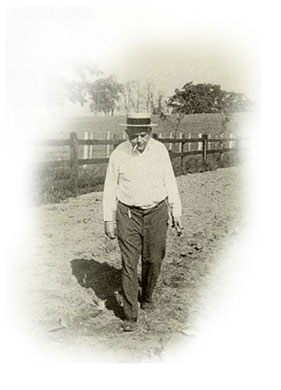
Hal Price Headley

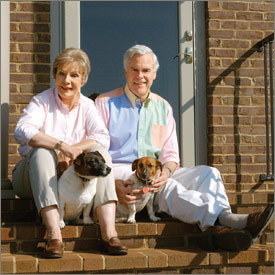
Dr. John Chandler and Alice Headley Chandler

The 484-acre breed farm, according to it's web site, was founded in 1962 by Alice Headley Chandler. The current owners are Dr. John Chandler and Alice Headley Chandler. Alice inherited the property from Hal Price Headley, her father – the founder of the famed Keeneland racetrack near Lexington, and its first president. Dr. Chandler is from south Africa.185 The Mill Ridge logo displayed at racing events is made of Hal Headley's old racing silks. His influence on the racing industry survives in the bloodlines of several champion broodmares, most notably Alcibiades.186
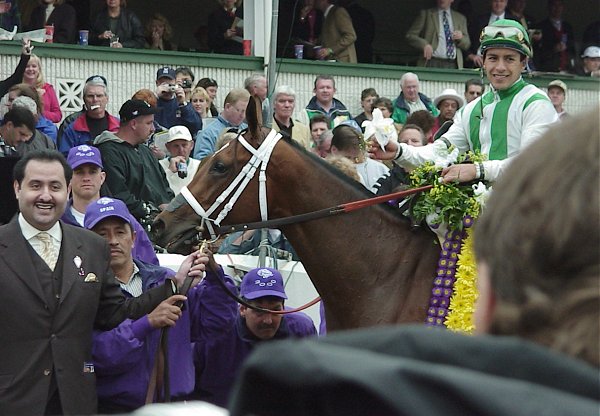
The Chandlers not only cared for Prince Ahmed bin Salman's horses, as widely reported – the family is VERY close to the Saudi royal family. In fact, Dr. Chandler oversees ALL horse-related business in North America for Khalid Abdullah, the cousin of bin Salman and Prince Turki – the focus of rage in England over the sale of torture implements to the Saudi rulers and a secret slush fund (part 23).187

Dr. Chandler RUNS Prince Abdullah's racing enterprise, Juddmonte Farms ... but that only raises ... more questions.


Beginning with: How is it this sleepy little horse farm in rural Lexington is in business with Saudi eminences tied to arms smuggling, BCCI, 9/11 psyops [the subject of Part 13 to come] and the wretched Bush clan?

These aren't just any Saudi eminences – they've long been financially symbiotic with the Bush family and Big Oil down in Houston and Dallas.

Alice Headley Chandler is their kind of woman.

The Breeders' Cup, where Lexington Comair crash casualty Marcie Thomason worked, is managed by a set of trustees, among them Alice Headley Chandler.

Two other trustees of the Breeders' Cup are old familiars in the history of the Bush clan:

• William S. Farish.
• William S. Farish Jr.188

Alice Chandler was born with her father's horse sense, not just his assets. And she's a very busy little woman. Ms. Chandler also chairs the University of Kentucky's Equine Research Foundation. On the board of directors, once again ...

• William S. Farish.189

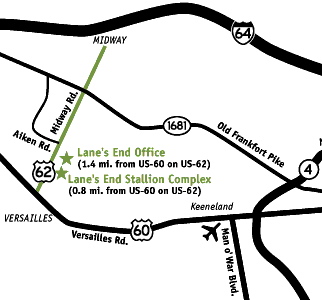
Farish is a known unknown in Blue Grass country, but the Chandlers are old friends. Will's horse farm, Lane's End, is just down the road from Mill Ridge. On this map, The Headley-Chandler property is located immediately south of Blue Grass Airport (the airplane marker). Will Farish's ranch is to the north of Versaille Road, marked by the green stars. Comair Flight 5191 crashed between the two horse farms:

"William S. Farish III (born March 17, 1939) is an American millionaire," says his Wikipedia entry, "a previous U.S. Ambassador to the United Kingdom (2001-2004) ... a horse-breeder, a chairman of Churchill Downs, major Republican Party donor, and family friend of President George W. Bush for several decades. He was awarded an honorary Doctor of Laws from the UNIVERSITY OF KENTUCKY in 2003. Farish was born in Houston, Texas in 1939. His father, William S. Farish Jr., was killed in an airplane accident during World War II. He is the grandson of William Stamps Farish II, who was President of Standard Oil from 1937 to 1942."190

Some basic Farish facts:

• Wife: Sarah
• Son: Bill Farish, Jr.
• Daughters: Mary Farish Johnston, Laura Farish Chadwick, Hillary Farish Stratton

• "Farish owns a trust company in Houston, Texas called W.S. Farish & Co.

• "An avid horse-breeder, Farish owns the 1800 acre Lane's End Farm near Lexington, Kentucky, which hosted Queen Elizabeth, a family friend, during her visits to Lexington.

• "Prescott Bush and William Farish Sr. were business partners in the 1930s and 1940s. Farish Sr. died of a heart attack on 29 November 1942; his son, William Farish II, died in a training accident in Texas six months later. William Farish III served on the board of GHW Bush's Zapata Corporation starting in 1966. Farish III was tapped in 1980 to manage Vice President Bush's blind trust.

• "Farish's grandfather, William Farish, on March 25th, 1942, pleaded no contest to conspiring with Nazi Germany while president of Standard Oil in New Jersey. He was described by Senator Harry Truman in public of approaching "treason" for profiting off the Nazi war machine. Standard Oil, invested millions in IG Farben, who opened a gasoline factory within Auschwitz in 1940. President George W. Bush appointed Farish American Ambassador to London.
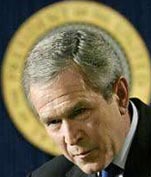
• "Farish's contributions to the Republican Party include: $100,000 to the Bush-Cheney inauguration committee fund – $26,875 to Republican candidates and parties between 1999-2000, including the maximum $1,000 to President Bush's campaign – $5,000 to the Bush-Cheney vote recount – Farish's support for Democrats was limited to a single contribution of $1000 to the unsuccessful campaign of former Rep. Scotty Baesler (D-Ky.). Farish's wife Sarah has also contributed to Republican politicians: $11,000 between 1999-2000, $1,000 to President Bush's campaign.190d
• Farish, Sr. drips with Holocaust wealth, but – like his friend George Bush – he is deeply concerned about the world affairs:

Farish fears war might force cancellation of Dubai World Cup


"William S. Farish, the United States Ambassador to Great Britain and owner of Lane's End near Versailles, Kentucky, considers a war with Iraq all but inevitable and fears it may result in the cancellation of the Dubai World Cup (UAE-G1) program in the United Arab Emirates on March 29. Farish, a close friend of the family of President George W. Bush and an acquaintance of Dubai Crown Prince Sheikh Mohammed bin Rashid al Maktoum, said he thinks a decision on war is likely by the end of next week ... "191
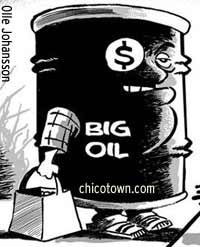
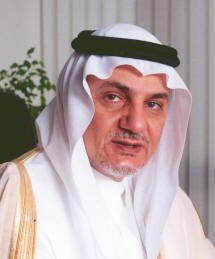
East meets West at the oil well, at the racetrack and Mill Ridge Farm. This particular branch of the Fahd family may be Saudis, but they are are planted to both worlds. Prince Turki, for instance (from the 9/11Encyclopedia site):
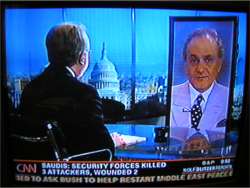
"Prince Saudi Turki al Faisal has a long tradition of friendship with the US government." Among his associates, count "Bin Laden's cousin Sheikh Suhail Ibn Mustahil Ibn Salem," who in league with James R. Bath and Khaled bin Mafhuz, were business partners of George W. Bush "in the family's Zapata Oil and Arbusto Ltd. Bin Laden's family had invested in the Carlyle Group (Blackstone), specializing in buyouts of defense and aerospace companies, in which George Bush Sr. holds the position of Consultant. According to business magazine Forbes, the father of Khalid bin Mafhuz (BCCI, Harken) [founded] the main Saudi bank, the Commercial National Bank, that created diverse companies in collaboration with the Sico, Swiss society of the Bin Laden Group....


"In December 2002, it was revealed, that Mahfouz' main business partner, YASSIN AL-KADI, was the secret owner of US-computer company PTECH." His business clients include Applied Materials, BoozAllenHamilton (Woolsey territory, the first witness called by the Kean Commission, name-dropper ((see parts 13, 21)), FBI, IBM Global Services, IRS, The Mitre Corporation, NATO, NAVAIR, PricewaterhouseCoopers, Sprint and the US Air Force.188

Ptech and the Mitre Corporation have been associated with 9/11 since financial analyst Indira Singh maintained that both "were in the basement of the FAA for two years prior to 9/11. Their specific job [was] to look at interoperability issues the FAA had with NORAD and the Air Force in the case of an emergency. If anyone was in a position to know [there] was a window of opportunity ... it would have been Ptech along with Mitre."192

Al-Kadi, Mahfouz's partner, was a member of the World Anti-Communist League (WACL), but that's another story ...
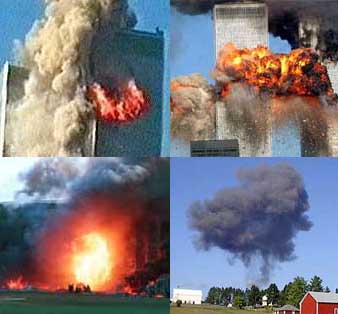


[This continues ... ]

NOTES

185.) http://www.ntra.com/stats_bios.aspx?id=2019

186.) http://www.zoominfo.com/Search/PersonDetail.aspx?PersonID=1849708

187.) http://www.millridge.com/who_history.asp

188.) "Breeders' Cup Limited Members & Trustees."
http://66.102.7.104/search?q=cache:wLOdGVV1vd8J:www.ca.uky.edu/agcollege/vetscience/Spring99.pdf+keeneland+and+farish+and+chandler&hl=en&gl=us&ct=clnk&cd=6

189.) http://en.wikipedia.org/wiki/William_S._Farish

190.) Ibid.

191.) Thoroughbred Times archive, March 7, 2003.
http://www.thoroughbredtimes.com/todaysnewsarchive/ttodaysnewsviewarchive.asp?ArchiveDate=3/7/2003#31104

192.) "Prince Turki al Faisal al Saud," 9/11 Encyclopedia.
http://911review.org/Sept11Wiki/PrinceTurkiAlFaisalAlSaud.shtml

Streaming Audio: Secrecy Post 9/11

http://stream.publicbroadcasting.net/production/mp3/national/local-national-710457.mp3

Decisions of war and secrecy - Douglas Feith; Award winning film about torture - Alex Gibney; Member of the Senate Intelligence Committee- Senator Russell Feingold; The Secret languge of Black Operations - Trevor Paglan; Warrantless Wiretapping - Eric Lichtblau

Douglas Feith served as the Under Secretary of Defense for Policy under Donald Rumsfeld and was one of the architects of the Bush administration's war on terrorism. He talks with Steve Paulson about decision making in the aftermath of 9/11. His book is "War and Decision: Inside the Pentagon at the Dawn of the War on Terrorism."

Alex Gibney is the director of the Academy Award winning documentary "Taxi to the Dark Side." He tells Anne Strainchamps about one detainee at a US Air Force Base in Afghanistan. And we hear clips from the film.

Senator Russ Feingold is a Democrat from Wisconsin who sits on the Senate Intelligence Committee. He talks with Steve Paulson about the workings of the Committee and its oversight of covert intelligence operations.

Trevor Paglan is the author of "I Could Tell You But Then You Would Have To Be Destroyed By Me." That's the Latin translation of a patch designed for a top secret Navy air testing station. Paglan has spent years collecting and deciphering the patches worn by military personnel engaged in covert and classified programs. He talks with Jim Fleming about some of his favorites.

Erich Lichtblau is one of the New York Times journalists who won a Pulitzer Prize for the story about the NSA's warrantless wire-tapping program. He talks with Steve Paulson about this secret program and the Bush administration's approach to the post 9/11 terrorist threat.

To the Best of Our Knowledge is an audio magazine of ideas - two hours of smart, entertaining radio for people with curious minds.

© Copyright 2008 Board of Regents of the University of Wisconsin System.

Monday, June 2, 2008

Unexpurgated Video: Rev. Wright on 9/11

See: http://malkabir.blogspot.com/2008/04/rev-dr-wright-on-911.html.

Former High-ranking Bush Officials Enjoy War Profits

The Condors (and flying simians) of 9/11 have come home to roost ... - - AC

Now working inside America's "shadow" spy industry, George Tenet, Richard Armitage, Cofer Black and others are cashing in big on Iraq and the war on terror.

By Tim Shorrock
Originally posted at Salon.com

May. 29, 2008 | Richard L. Armitage, who served from 2001 to 2005 as Deputy Secretary of State, was a rarity in the Bush administration: an official who delighted in talking to the press. Reporters loved him for his withering criticism of the neoconservative zealots around President George W. Bush and in part because he fed them tidbits about the White House they could obtain nowhere else. His accidental disclosure to conservative columnist Robert Novak that Valerie Plame, the wife of Iraq war critic Joseph Wilson, was working undercover for the Central Intelligence Agency remains one of the most notorious leaks of the Bush era.

But perhaps because of his cozy ties to the Washington press corps and the media's obsession with Plamegate, very little has been written about Armitage's extensive business dealings. In fact, Armitage is one of the most successful capitalists in Washington. He has successfully parlayed his experience in covert operations and secret diplomacy into a thriving career as a consultant and adviser to some of the biggest players in America's Intelligence Industrial Complex -- corporations that are working at the heart of U.S. national security and profiting handsomely from it.

Armitage, currently an adviser to presidential candidate John McCain, had once been Colin Powell's closest ally during the bitter disputes inside the Bush administration over the invasion and occupation of Iraq. According to the Washington Post's Bob Woodward, Armitage advised Powell on more than one occasion to tell the neocons to "go fuck themselves," and, at one point, even refused to deliver a speech about Iraq drafted for him by Vice President Dick Cheney's office.

Yet, three years after those epic battles, Armitage is enjoying life as a stakeholder in a dozen private companies that are making money directly from the war started by his former nemeses.

Over the past decade, contracting for America's spy agencies has grown into a $50 billion industry that eats up seven of every 10 dollars spent by the U.S. government on its intelligence services. Today, unbeknownst to most Americans, agencies once renowned for their prowess in analysis, covert operations, electronic surveillance and overhead reconnaissance outsource many of their core tasks to the private sector. The bulk of this market is serviced by about 100 companies, ranging in size from multibillion dollar defense behemoths to small technology shops funded by venture capitalists.

Nearly every one of them has sought out former high-ranking intelligence and national security officials as both managers and directors. Like Armitage, these are people who have served for decades in the upper echelons of national power. Their lives have been defined by secret briefings, classified documents, covert wars and sensitive intelligence missions. Many of them have kept their security clearances and maintain a hand in government by serving as advisers to high-level advisory bodies at the Pentagon, the Central Intelligence Agency, the National Security Agency and the White House. Now, with their government careers behind them, they make their living by rendering strategic advice to the dozens of information technology vendors and intelligence contractors headquartered along the banks of the Potomac River and the byways of Washington's Beltway.

Ever since the 1950s, with the rise of America's modern military-industrial complex, high-level U.S. officials and military men have moved between the government and private sectors. But what we have today with the intelligence business is something far more systemic: senior officials leaving their national security and counterterrorism jobs for positions where they are basically doing the same jobs they once held at the CIA, the NSA and other agencies -- but for double or triple the salary, and for profit. It's a privatization of the highest order, in which our collective memory and experience in intelligence -- our crown jewels of spying, so to speak -- are owned by corporate America. Yet, there is essentially no government oversight of this private sector at the heart of our intelligence empire. And the lines between public and private have become so blurred as to be nonexistent.

Shortly after leaving government in 2005, Armitage was recruited to the board of directors of ManTech International, a $1.7 billion corporation that does extensive work for the National Security Agency and other intelligence collection agencies. He's also since advised two private equity funds with significant holdings in intelligence enterprises. Veritas Capital, where Armitage served as a senior adviser from 2005 to 2007, owns intelligence consultant McNeil Technologies Inc. and DynCorp International, an important security contractor in Iraq. For a time, Veritas also owned MZM, Inc., the CIA and defense intelligence contractor that was caught -- before the Veritas acquisition -- bribing former Republican Congressman Randy "Duke" Cunningham.

In 2007, Armitage, along with several Veritas executives, moved over to DC Capital Partners, an intelligence-oriented buyout firm with some $200 million in assets. One of its first acquisitions after Armitage came on board was Omen Inc., a Maryland company that provides information technology and consulting services to the NSA. The fund has since combined Omen with two other intelligence contractors to form a new company called National Interests Security Company LLC, which has 850 employees, more than half of them holding top secret or higher security clearances.

Through his own eponymous consulting firm, Armitage has lobbied on behalf of L-3 Communications Inc., one of the nation's largest intelligence contractors, to help it sell anti-submarine surveillance systems to Taiwan. L-3, like ManTech, is also heavily involved in Iraq. (Further topping off Armitage's investment interests in the war: He sits on the board of directors of ConocoPhillips, which is aiming to become a major player in Iraq's energy industry through a joint venture with Russia's Lukoil.)

In these jobs, former high-level officials like Armitage continue to fight terrorist threats and protect the "homeland," as they once did while working in government. But by fusing their political careers with business, these former officials have brought money-making into the highest reaches of national security. They have created a new class of capitalist policy-makers that is bridging the gap between public policy and private business in ways that are unprecedented in American history.

Take the case of George Tenet, who retired in 2004 from his service as President Bush's CIA director. As he was writing his memoirs and preparing for a new career as a professor at Georgetown University, Tenet quietly began cutting deals with companies that earn much of their revenues from contracts with the intelligence community. And, as I was the first to report a year ago in Salon, Tenet began to make big money off of the Iraq war. By the end of 2007, he had made nearly $3 million in directors' fees and other compensation from his service as a director and adviser to four companies that provide the U.S. government with technology, equipment and personnel used for the war in Iraq, as well as in the broader war on terror.

Those companies include L-1 Identity Solutions Inc., an intelligence and biometric conglomerate that holds a near-monopoly on software that identifies people by their fingerprints and facial characteristics; Guidance Software, a Pasadena, Calif., supplier of investigation and forensic software to the FBI and the Intelligence Community; and the Analysis Corp., a Fairfax, Va., intelligence contractor founded by Tenet's former chief of staff, John Brennan. Brennan himself went into the spy business after serving as chairman of the National Counterterrorism Center -- which is one of the Analysis Corp.'s biggest clients.

In Tenet's most prestigious position, he was the only American director of QinetiQ, the British defense research company that was privatized in 2003 and acquired by the well-connected Carlyle Group. Earlier this year, Tenet left QinetiQ's UK parent to join the board of QinetiQ North America, the company's U.S. subsidiary and one of the fastest-growing contractors in the U.S. intelligence market. There, Tenet is working with CEO Duane P. Andrews, a former assistant secretary of defense who was the chief intelligence adviser to Dick Cheney when he was Secretary of Defense in the early 1990s. (Prior to joining QinetiQ, Andrews would have had plenty of contact with Tenet, as Andrews was a senior executive with Science Applications International Corp., a major CIA and NSA contractor.)

In January, QinetiQ North America expanded its intelligence network by hiring Stephen Cambone, who was the assistant secretary of defense for intelligence under Donald Rumsfeld, as its vice president for strategy. That appointment came just days after the company won a $30 million, five-year contract to provide unspecified "security services" to the Pentagon's Counter-Intelligence Field Activity office, a controversial domestic security agency that was created by Rumsfeld and Cambone in 2002 and later took heat from Congress for illegally spying on antiwar and religious activists.

One of the most spectacular transitions from intelligence to business took place at Blackwater USA, the security contractor infamous for its trigger-happy soldiers in Iraq. One of Blackwater's first major contracts, negotiated by founder Erik Prince, was a secret no-bid $5.4 million deal with the CIA signed shortly after the September 11 terrorist attacks. Shortly thereafter, Blackwater hired as its vice chairman Cofer Black, the CIA's former top counterterrorism official who was dispatched by Tenet in the days after 9/11 to brief President Bush and his advisers on the CIA's plans for overthrowing the Taliban in Afghanistan. Rob Richer, the CIA's former Associate Deputy Director of Operations and, before that, head of its Near East division, became Blackwater's Vice President of Intelligence, and later went to work for a private intelligence company.

Appointments like this, observes intelligence expert Steven Aftergood, reflect the "incestuous" relationships that exist between former officials and private intelligence contractors. "It's unseemly, and what's worse is that it has become normal," he told me after the news broke about Stephen Cambone's move to QinetiQ. "The problem is not so much a conflict of interest as it is a coincidence of interests -- the Intelligence Community and the contractors are so tightly intertwined at the leadership level that their interests, practically speaking, are identical."

Former high-ranking officials bring tremendous value to a government contractor seeking new work or a private equity fund looking for companies to buy. "You understand the decision-making process inside the Beltway, and that is liquid gold," says Roger Cressey, who worked in President Clinton's National Security Council as deputy director of counterterrorism and is now a partner in Good Harbor Consulting, a company he founded with his former boss at the NSC, Richard Clarke. Cressey, who is a terrorism consultant for NBC News, adds that the influence of a retired official lasts only a limited period of time after he or she leaves office. "You have 18 to 24 months to translate your rolodex into real services," he says.

But the value of a CIA director or national security official goes much further than a rolodex. Because high-ranking officials have been privy to classified and top-secret information for years -- and sometimes, in the cases of people like Armitage and Tenet, decades -- they have details about intelligence programs, classified operations and the internal affairs of other countries that few others can claim.

Armitage, who was a senior Pentagon official during the Reagan administration, was deeply involved in covert operations in Vietnam as a Navy officer and, shortly after September 11, flew to Pakistan on behalf of the Bush administration to deliver a stark message to its military president, Pervez Musharraf, that drastic measures would follow if Musharraf did not support the war on terror. He also led an influential group of U.S. officials who quietly pushed the Japanese government to adopt a more militaristic role in global affairs over the last seven years.

In all of these tasks, Armitage would have had access to the most classified intelligence available to U.S. officials, including telephone intercepts provided by the NSA. That kind of experience is extremely valuable to a company like ManTech, which sells and operates signals intelligence systems to the NSA and provides "cyber and physical security" for U.S. embassies and consulates around the world. According to ManTech CEO George J. Pedersen, who also employed Armitage as an adviser during the 1990s, Armitage was brought on as a director for his "enormous insight into our corporation's capabilities and operations." (Armitage did not respond to a written request for an interview.)

Tenet is even more connected: With the former CIA director on board, L-1's CEO Robert LaPenta told analysts last year, "a phone call gets us in to see whoever we want." Tenet, of course, has extensive knowledge about intelligence services in Saudi Arabia, the UK and Pakistan as well as secret operations in Iraq, Afghanistan and Somalia. His insights have already helped L-1 in its acquisition strategies. Shortly after Tenet joined L-1's board, the company acquired one of the CIA's hottest contractors, SpecTal, which has 300 employees with top-secret security clearances who work extensively in Afghanistan. Months before, during a 2006 meeting with L-1 executives about SpecTal's potential business in that country, Tenet urged company executives to "call the SpecTal guys" because "they know everybody in every one of these ministries that you need to go talk to," according to LaPenta. L-1 not only called them; it bought them out, and has since combined SpecTal with its latest acquisition, Advanced Concepts Inc., a systems engineering firm holding contracts at the NSA. Tenet, through a spokesman, declined to comment.

Power also flows out of a former high-ranking official's presence as a policy-maker. During the 1990s, when Armitage was building his reputation as a private consultant and defense industry adviser, he was a member of President Clinton's Defense Policy Board. Although Armitage, like any board member, was prohibited from divulging contents of meetings with his clients, the internal discussions and access to classified documents helped shape the advice he gave his clients. That's certainly the impression one gets from officials at CACI International, a key intelligence contractor where Armitage served on the board of directors during that time. During his tenure as a director in the 1990s, CACI officials wrote in 2001, Armitage provided "valuable guidance on CACI's strategic growth plans and the federal government and Defense Department markets."

The same can be said of many of Armitage's contemporaries in the defense and intelligence industries who advise their clients while holding positions in government advisory boards at the Pentagon, the CIA and the NSA. One of Armitage's fellow directors at ManTech, for example, is Retired Admiral David E. Jeremiah. He is a member of President Bush's Foreign Intelligence Advisory Board and a paid adviser to the National Reconnaissance Office, the super-secret agency that manages the nation's spy satellites. A third ManTech director, Richard J. Kerr, a 32-year veteran of the CIA, led a 2005 study for the CIA into the agency's prewar assessments of Iraq and its weapons of mass destruction.

One of the most representative figures in America's new private intelligence elite is Joan A. Dempsey. She is currently a vice president of Booz Allen Hamilton, where for the last three years she has worked alongside former CIA director Jim Woolsey and more than 1,000 other former intelligence officers. Dempsey, a steely-looking blonde, began her career as a naval technician listening to Soviet bomber and submarine traffic at Misawa Air Base in Japan, a key NSA listening post. Over the years, she slowly worked her way up the intelligence chain of command at the Pentagon, from Naval Intelligence to the Defense Intelligence Agency. In 1997, she was appointed deputy assistant secretary of defense for intelligence and security in the Clinton administration, the highest civilian intelligence position in the Department of Defense at the time. There, she had responsibility over the NSA, the NGA and the NRO, the three national collection agencies controlled by the Pentagon, as well as the DoD's tactical command, control, communications and intelligence (C3I) efforts.

By 1999, Dempsey had become George Tenet's representative to the rest of the Intelligence Community as the CIA's director of community management. In that position in 1999 she won the everlasting support of the Intelligence Community -- and its growing army of contractors -- when she led negotiations with the Republican-led Congress that added $1.2 billion to the intelligence budget. That figure still remains one of the largest single-year increases in the history of the National Foreign Intelligence Program. Five years later, partly in recognition of this feat, Dempsey was given the William O. Baker award for meritorious intelligence service by the Security Affairs Support Association (SASA), which from 1979 to 2005 represented the largest prime contractors at the NSA and the CIA. Her remarks at that ceremony serve as a kind of leitmotif for the outsourcing phenomenon in intelligence.

In her acceptance speech, Dempsey paid effusive praise to the corporations she had known over the years, many of whom had purchased tables for the event: General Dynamics, Essex Corporation, Oracle Corporation, Computer Sciences Corporation, AT&T Government Solutions, ManTech and Lockheed Martin. She thanked her "Pentagon friends" from L-3 Communications, with whom she had worked "on my favorite program of all time, the U-2" spy plane. She spoke of her pride in working with the Boeing Company on the Future Imagery Architecture, a $4 billion project by the NRO and the NGA to build and operate the next generation of imagery satellites (the project was cancelled in 2005). At the CIA, Dempsey said, she had "benefited enormously" from her work with Booz Allen Hamilton and SAIC.

Then she went slightly off-script: "I like to call Booz Allen the shadow IC," she said, using the common acronym for the intelligence community, because it has "more former secretaries of this and directors of that" than the entire government. That must have caused some chuckles at the lead table, where Woolsey was sitting. But Dempsey, of course, got the last laugh. Fifteen months later, she joined the "shadow IC" herself as a vice president. In her job at Booz Allen, she "provides strategy consulting services to the US government, including the national security and civil sectors, as well as commercial industry," according to company spokesperson George Farrar. Then, in January 2007, Dempsey's joke came full circle when Mike McConnell, her boss at Booz Allen, was appointed Director of National Intelligence. In the space of a few years, Booz Allen had been transformed from a "shadow" intelligence community player into the real thing.

It was most intriguing, then, to hear what Dempsey is actually doing in her new job at Booz Allen. In the spring of 2006, Dempsey was invited to speak to a seminar on intelligence reform at Harvard University. In a remarkably candid speech, Dempsey disclosed that her office at Booz Allen was evaluating the entire decision-making process within the intelligence community. Under her supervision, she said, Booz Allen was "studying the implications of the many decisions that are being made on a daily basis right now all over the intelligence community," including by the staff of the Office of the Director of National Intelligence. "No one has thought through the implications of those decisions in a strategic or aggregate sense for the future," she added. So Booz Allen is helping out by "trying to forecast" what these decisions "mean for the intelligence community of the future -- what it's going to look like, how it's going to operate -- along a trend line."

It was a remarkable circumstance: Booz Allen was conducting a study for the DNI, a position that was about to be filled by one of the company's own -- Mike McConnell. The shadow IC was now helping the real IC prepare for an immediate future when the real IC would be led by the shadow IC. This was more than a revolving door: The private and the public sides of intelligence were now sharing the same room.

-- By Tim Shorrock

http://www.salon.com/news/excerpt/2008/05/29/spies_for_hire/print.html

Sunday, June 1, 2008

The Path to 9/11 (Part 11): Adnan Khashoggi & the 1999 Trial Run in Moscow

By Alex Constantine
(Originally, Adnan Khashoggi Linked to 9/11 Terrorists, Part 21)

Two years before the towers in Manhattan crumbled under the weight of global political corruption, a spate of bombings in Russia left relatives and
victims, CNN reported on September 10, 1999, "searching for answers."

At least 90 bodies, including seven children, were dragged from the wreckage of a bombed-out apartment building in Moscow in early September 1999. Russian Prime Minister Vladimir Putin, in a televised speech, suspected terrorism; if so, he said, "we are facing a cunning, impudent, insidious and bloodthirsty opponent."1

CNN reported: "Russian President Boris Yeltsin declared a day of mourning on Monday for the victims of Russia's last three explosions and bombings - the Moscow blast, the bombing of a shopping center near the Kremlin and the September fourth car bomb that demolished another apartment building in Buinaksk, in the southern Russian region of Dagestan"

By the third week of September, the death toll rose to over 200. Chechen
forces were behind the bombings, proclaimed Yeltsin, a belief shared by Yuri
Luzkhov, the mayor of Moscow. Interior Minister Vladimir Rushailo oversaw
the investigation and announced that the Russian government "will consider
itself within its rights to use all resources at its disposal to rebuff the
aggression."2

And none of this added up. The harried Russian proles were quick to accept
the governemnt's explanation that Chechens were responsible for the blasts
in Moscow and the Caucasus. But the Asia Times editorialized, "it is highly
unlikely." And no one stood to benefit by the ourbreak of bombing but but,
well, Yeltsin

In a statement of denial, Chechen leader Shamil Basayev stated, "We had
nothing to do with the explosion in Moscow. We never kill civilians. This is
not our style."

Provisions anticipating the Patriot Act were proposed. The Duma considered
declaring a state of emergency. Until the bombings, the public had
steadfastly opposed such measures, but even Yegor Stroyev, speaker of the
Federation Council, the upper hall of parliament, had to admit that he'd
firmly opposed emergency measures in the past but after the second Moscow explosion, well, there was an obvious "need to consolidate the legal base for combating the rampage of terrorism and crime."3

Still, there were the usual skeptics. Viktor Ilyukhin, a Communist leader,
dismissed the bombings as provocateur actions: "Political hysteria is being
fanned artificially, including by way of explosions to cancel parliamentary
and presidential elections through a state of emergency."4

Day by day, the true, sordid details emerged in Versiya, Novaya Gazeta and
UK's Independent to erode Yeltsin's credibility. It developed that there was
more to the bomb plot than the government had revealed that its true
origins lay not in the Russian satellites but in a meeting of conspirators
held at the flat of Adnan Khashoggi

"It is clear that apartment explosions in Moscow would not have happened if
somebody in the Russian political elite did not want them," Novaya Gazeta
opined on January 24, 2000. "One by one, pieces of puzzle were put together.

But there were a few details that were lacking. They began to clear in
January, when Zhirinovsky and Chubais finally broke up. And at the same
time, some of the participants started to tell their version of events. In
the Versiya newspaper, there was an article about the meeting of [Alexander]
Voloshin with [Shamil] Basayev in France." Basayev was the radical Muslim
leader who planned the violence on Dagestan. "This did not happen in Paris,
as some of the newspapers reported later, but on the villa of Adnan
Khashoggi, Arabic millionaire, on the Mediterranean."

French intelligence agents monitored the meeting and details surfaced in
the public print. Khashoggi denied that he had attended the meeting. But Its
main participants - Anton Surikov, "formerly" of Army special forces, and
Aleksandr Voloshin, Yeltsin's Chief of Staff - offered no comment. When
reporters asked Surikov, he claimed that he hadn't travelled abroad in
years, especially not to France. This did not quite square with the public
record, however, Just a few months before, he was in Washington, D.C. to
meet with Yuri Maslukov, Russia's deputy prime minister, and Michel
Camdessus, managing director of the IMF. Surikov had also flown to France on a couple of occasions - once in December 1994, and again in the summer of 1999. He had departed on June 23 aboard an Aeroflot bound for Paris, in fact, and returned from Nice on July 21, nearly a month later.5

A book on the Russian spy agency, Spetzsnaz GRU, written by former
intelligence agents, reports that when the rebels entered from Chechnya, the
government's forces were "commanded not to enter into battle with them and not to hinder the movement of the rebels."6

The 1999 bombing campaign punctuated an uneasy period of calm. From August 1996 through August 1999, Chechnya had been relatively still. "Hostilities resumed following a bold incursion from Chechnya into neighboring Dagestan by an 'international' force of Wahhabis," John Dunlop at the Hoover Institute reports, "whose titular leaders were the legendary Chechen field commander Shamil Basaev and the shadowy Arab commander Khattab. In September of 1999, there occurred the notorious terror bombings of large apartment complexes in Moscow, Volgodonsk and Buinaksk which served to infuriate the Russian populace in a way similar to the American public's reaction to the events of 11 September in this country. On 23 September, Moscow once again commenced the bombing of Chechnya, and the second Russo-Chechen war of the past decade was on."7

Alexander Voloshin, who attended the meeting at Khashoggi's villa, is a
singular political figure in Russia, outspoken in his support of the United
States, in temperament comparable to an American Cold Warrior, Al Haig or
Donald Rumsfeld. On October 23, 2003, the Guardian reported that Vladimir
Putin's chief of staff was at the center of "a furious row" between Moscow
and Kiev "after he reportedly suggested Russia might bomb Ukraine if it did
not back down in a diplomatic tiff over a small island between the two
former Soviet states. Alexander Voloshin, the head of the president's
administration, made the remarks while he was briefing Ukrainian journalists
at the Kremlin. The row is over 100 metres of sand."8

In the end, however, Voloshin was forced out of government not for his ties
to the meeting at Khashoggi's villa, or to terrorists, but to Big Oil:

Putin's powerful chief of staff resigns
Voloshin's resignation over arrest of top oil tycoon widens political
scandal
Pakistan Daily Times
November 1, 2004

MOSCOW: Moscow press reported Wednesday that Kremlin's powerful chief of staff had resigned in protest of the arrest of a top oil tycoon in a
widening political scandal on the eve of Russian parliamentary elections.
The Vedomosti business daily said that President Vladimir Putin had accepted Alexander Voloshin's resignation on Monday night after meeting for several hours with top Kremlin officials.

Newspaper reports said that Voloshin had handed in his resignation on
Saturday only hours after Russia's richest man, Yukos chief Mikhail
Khodorkovsky, was hauled in by secret service men at gunpoint in a Siberian
airport and flown to Moscow for questioning.

Voloshin, 47, is seen as one of the last figures in the Kremlin to have hung
on from the era of Putin's predecessor Boris Yeltsin and a leader of an
administration clan known as "the Family" that battled the hawkish
"siloviki" camp of former secret service agents that recently emerged in
Putin's court. He was seen as a strong backer of big business and an
instrumental Kremlin aide who managed to skilfully mediate between the
various administration factions and parliament lawmakers on key economic
reform issues.

His potential resignation had been rumoured in Moscow for months as the
Family ‹ which supported big businesses including Yukos ‹ was being squeezed out by the "siloviki" clan.

Western investors said that Voloshin's resignation ‹ if officially confirmed ‹ would mark an escalation of political instability on the eve of December 7 parliamentary elections.

"Assuming Voloshin's departure is confirmed today, this will only underline
the seriousness of the political crisis resulting from Putin's decision to
deal with the political problem of Khodorkovsky using KGB methods," the
United Financial Group wrote in a research note. The investment house noted that Voloshin "seems to have made himself indispensable to Putin as a discreet but effective administrator with a good grasp of the reform policy
agenda and adept at arbitrating between competing interests." Besides
heading Putin's administration, Voloshin for the past four years has also
served as chairman of the board of the United Energy System electricity
monopoly that has been struggling to undertake reforms for the past four
years.

But the United Financial Group predicted that Putin would probably try to
seek a balance within his administration and was unlikely to give the post
to any of the top members of the secret service Kremlin factions.
Voloshin became deputy head of Yeltsin's administration in 1998 and became chief of staff the following year. He was attributed with drafting economic portions of Yeltsin's speeches. Putin kept Voloshin on his post when he took the presidency following Yeltsin's abrupt resignation on December 31, 1999.9

NOTES

1) Jill Dougherty, "At least 90 dead in Moscow apartment blast," CNN report,
September 10, 1999.
http://www.cnn.com/WORLD/europe/9909/10/russia.explosion.03/

2) STRATFOR.COM, "Who gains from the Moscow apartment bombings?" Asia Times,
September 14, 1999. http://www.atimes.com/c-asia/AI15Ag01.html

3) Ibid.

4) Dougherty.

5) Boris Kagarlitsky, 'We Donít Talk To Terrorists. But We Help Them?'
Novaya Gazeta, [translation by Olga Kryazheva, research intern, Center for
Defense Information, Washington DC], January 24, 2000.
http://geocities.com/chechenistan/conspiracy.html

6) John B. Dunlop, 'The Second Russo-Chechen War Two Years On," Presentation
at U.S. and World Affairs Seminar, Hoover Institution, October 17, 2001.
http://66.102.7.104/search?q=cache:nGpCwJsA3z0J:www.freerepublic.com/focus/f-news/1233969/posts+Voloshin+and+khashoggi

7) Ibid.

8) Nick Paton Walsh, "Russian official condemned for joke about bombing
Ukraine," Guardian, October 23, 2003.
http://www.rusnet.nl/news/2003/10/23/currentaffairs04.shtml

9) http://www.dailytimes.com.pk/default.asp?page=story_30-10-2003_pg4_1

The Path to 9/11 (Supplement to Part Eight): A Corruption Profile of Fidelity Investments

By Alex Constantine

Eleven reasons to not do business with Boston-based Fidelity Inestments:

CONTENTS

1) Fidelity is Heavily invested in the Military-Industrial Complex
2) Drugs and Prostitutes
3) Former Secretary of Defense (and CIA & SAIC Director) Robert Gates was a a Fidelity Director Until 2006
4) Investments in Genocide
5) CENSORSHIP OF THE FIDELITY GENOCIDE ISSUE
6) Willful Violations of Money Laundering and Anti-Terrorism Laws
7) Dwarf Tossing
8) Insider Trading
9) Annuity Fraud
10) More Genocide
11) Class Warfare


Fidelity and the Military-Industrial Complex:


From: "Flirting with Fascism -- US Imperialism's Hidden Romance"
www.agitprop.org.au

" ... The major financial institutions of Wall Street have heavy stakes in the military business, as do new power centres. FMR Corporation, the holding company of the Fidelity Group of mutual funds — the largest in the world, with over $400 billion in assets — has the most widespread military equipment holdings, including 6.7 per cent of Lockheed Martin, 10.2 per cent of General Dynamics, 22.8 per cent of Litton Industries and 6.1 per cent of Northrop Grumman. ... "

http://www.agitprop.org.au/stopnato/1999110502.php
•••••••
Drugs and Prostitutes

" ... In Boston, the U.S. attorney's office is separately investigating whether brokers paid for illegal drugs and prostitutes for Fidelity traders, including at a bachelor's party in March 2003 that Mr. Quinn and rivals from two other brokerage firms helped pay for, according to people familiar with the matter. ..."

http://fidelityobserver.blogspot.com/2005/08/fidelity-bribery-scandal-and-this.html
•••••••
Robert Gates (Dod, formerly CIA, SAIC) was a Fidelity Director Until 2006

" ... Gates' largest source of outside income last year, at $373,000, was from Boston-based Fidelity Investments, one of the world's largest investment houses. Gates' Fidelity holdings are described as deferred compensation, according to his disclosures. Gates said recently that he would resign from Fidelity's board, on which he has served for nine years. Elected last year as chairman of the board's independent directors, Gates and his group oversee 345 mutual funds, including ones featuring U.S. defense and energy stocks. He commuted from Texas for 11 board meetings a year, once noting that he had missed only one meeting because of a conflict with a college event. Gates' Fidelity salary was set by the independent directors. ... "

"Gates' personal holdings have grown substantially since he left government, when he had no more than $165,000 in savings and retirement accounts. Now, he has $1.1 million in holdings with Fidelity Investments, as well as stock holdings in some of the companies where he has served as director. ... "

http://www.oldamericancentury.org/bb/lofiversion/index.php/t12560.html
••••••••
Investments in Genocide

"As you know, Greens and other activists have been protesting Al Gore because his mother's trust owns stock in Occidental Petroleum, which has been striving to drill for oil on the sacred lands of the indigenous U'wa people in Colombia. In the US, the protests have had two main targets: Mr. Gore and Fidelity Investments, one of the largest holders of Occidental stock. Fidelity holds far more shares, by the way, than Pauline Gore's trust. Fidelity controls about $500 million worth of Occidental Stock, according to the Rainforest Action Network, which accuses Fidelity of "Investing in Genocide." Protestors have urged Fidelity investors to divest from Fidelity unless Fidelity pressures Occidental to cancel its Colombia project. ...

"Fidelity Magellan also owns stock in Dick Cheney's Halliburton Company, which has been linked in a published report to the deaths of environmental activists and indigenous people in the Niger Delta. "

http://www.bushwatch.com/nader2000.htm

CENSORSHIP OF THE FIDELITY GENOCIDE ISSUE

" ... Fidelity Investments is staring down an advertising campaign that urges its money managers to 'stop investing in companies that fund genocide in Darfur.' Major media outlets are also on the spot. The mutual funds giant said it recently convinced CNN and Newsweek to change their minds about running ads sponsored by The Save Darfur Coalition. ...

http://www.boston.com/news/globe/editorial_opinion/oped/articles/2007/05/10/divestment_dilemma/
•••••••
Willful Violations of Money Laundering and Anti-Terrorism Laws

Former compliance officer blows whistle on Fidelity Investments over willful Patriot Act violations

July 3, 2007

A lawsuit against Fidelity Investments accuses the mutual fund giant of deliberately avoiding and violating portions of the U.S. Patriot Act. The whistle was blown on the company by, of all people, one of its former compliance officers. What has resulted is a mess of finger-pointing, additional lawsuits, and rush to put a seal on anything related to the case or the purported activity.

David van Duyn, who worked as an anti-money laundering advisor for the company, accused Fidelity executives of instructing him to sidestep the Patriot Act, which laid out requirements for monitoring and reporting client transactions. To top things off, he accuses his former superiors of handing down orders to falsify documents. Duyn claims the company blatantly violated the Act and other laws intended to track money laundering and funding for terrorist networks.

Fidelity has countered with a suit of its own in an effort to prevent Duyn from divulging “confidential information” - which Fidelity insists would violate the company’s non-disclosure agreement signed by employees. The suit is in addition to its hurried efforts to stamp out from the public record any potentially damaging information or allegations surrounding its internal policies and possible negligence of customer accounts.

http://ethisphere.com/former-compliance-officer-blows-whistle-on-fidelity-investments-over-willful-patriot-act-violations/
•••••••
Dwarf Tossing

SEC probes dwarf-tossing party for Fidelity trader
By Jason Nisse
Sunday, 14 August 2005

US regulators probing "inappropriate gifts" given to dealers at the financial giant Fidelity Investments have unearthed evidence of an astonishing party.

The March 2003 bachelor weekend for Thomas Bruderman Jnr, a star Fidelity trader, was paid for by three Wall Street firms - Jefferies & Co, Lazard and SG Cowan. A $65,000 (£36,000) private jet was laid on to take Mr Bruderman and his guests, who included Fidelity's then head of stock trading, Scott DeSano, and Dennis Kozlowski, the former head of Tyco International, from Boston to Miami. They were put up at the Delano Hotel, beloved of celebrities such as Madonna, and taken out on a yacht, along with at least two women who were hired to attend.

Another person hired was Danny Black, who describes himself as the "Heidi Fleiss of dwarf talent". His official role was as a waiter, but he also allowed himself to be thrown by partygoers in an activity called "dwarf tossing". Mr Black said that it "was a lavish party and a good time was had by all". ...

http://www.independent.co.uk/news/business/news/sec-probes-dwarftossing-party-for-fidelity-trader-502734.html
•••••••
Insider Trading

SEC Charges Fidelity Trader with Insider Trading
24/04/2008

"The SEC has charged David Donovan, Jr., a former equity trader at Fidelity Investments, and David Hinkle, a former broker at Capital Institutional Services, with defrauding Fidelity and its advisory clients through a series of inside trades. According to the Commission’s allegations, Donovan and Hinkle used confidential information from Fidelity’s internal order database to trade on or ahead of the firm’s orders. The SEC claims that the duo failed to inform Fidelity about the trades and that they profited through them.

"The SEC’s suit seeks disgorgement with prejudgment interest and the imposition of civil penalties against Donovan and Hinkle. ... "

http://www.csapartners.eu/blog/index.php/category/insider-trading-scandal/
•••••••
Fidelity - The House of Annuity Fraud

http://www.thesqueakywheel.com/complaints/2006/APR/complaint8728.cfm
•••••••
More Genocide

Investors Against Genocide launched, extending the work of Fidelity Out Of Sudan

On September 5, the Fidelity Out Of Sudan campaign broadened its investment firm targets and launched Investors Against Genocide. In addition to Fidelity, targets will include other major financial institutions with large holdings in PetroChina.

The InvestorsAgainstGenocide.org site will replace and extend the FidelityOutOfSudan.com website and continue the work against Fidelity, while extending to the other major holders of PetroChina. ...

http://fidelityoutofsudan.googlepages.com/

Also see: Fidelity's Sudan Problem, Forbes: "Fidelity is the biggest investor in PetroChina. PetroChina is one of the largest companies operating in Sudan. They're pumping tons of oil. And that's generating massive amounts of revenue for the government of Sudan." The Khartoum government has been condemned by the United States, the U.N. and most everybody else who has paid attention to the long-running crisis in Darfur, where an estimated 400,000 people have died. How has Fidelity responded to calls for divestment? With form letters and prepared statements. ... "

http://money.cnn.com/2007/01/29/news/companies/pluggedin_gunther_sudan.fortune/index.htm
•••••••
Class Warfare

Fidelity Investments "at War with the Workers of America"

" ... AFL-CIO Secretary-Treasurer Richard Trumka [said]: 'There is a war against the workers of America. The labor movement is confronting all the aiders and abetters of corporate greed and the corporate con men.' Fidelity Investments refuses to make public its proxy voting, regarding major decisions it makes about its shareholders’ mutual funds, including those workers of the major corporations that it handles. ... "

http://www.pww.org/index.php/article/view/1773/1/103/

Saturday, May 31, 2008

The Path to 9/11: PART 10 - Blackstone, Bear-Stearns, Warren Buffett, Larry Silverstein, Eliot Spitzer, Kroll, Jerry Hauer, BCCI, SAIC ...

Buffett and Blackstone in the News

Blackstone Group eyes German utility giant RWE
Marietta Cauchi, LBO Wire
30 May 2008

" ... Blackstone Group has been looking at German utility giant RWE, a person familiar with the situation told Dow Jones. The person was responding to market rumors that Blackstone was working with Permira and Warren Buffett on a joint bid for RWE. ... "
•••••••
Blackstone Group, Larry Silverstein, Kroll Associates, Eliot Spitzer

From: "Spitzer's Real Scandal"
http://www.nymegaphone.com/node/24

... New York real estate baron Larry Silverstein became primary lease-holder on the World Trade Center a mere six weeks before 9/11. It had never changed hands before. For a down payment, Silverstein put up only $14 million of his own money, and his friends at the powerful investment bank Blackstone Group kicked in another $111 million. After 9/11, Silverstein demanded a whopping $7 billion insurance payout, in the form of two $3.5 billion payments. He argued the two different plane crashes were two separate “occurrences” of two separate attacks.

The Megaphone has now learned that as attorney general, Spitzer got involved behind the scenes, and in the courts, filing a amicus curiae (“friend of the court”) brief on Silverstein’s behalf on Jan. 15, 2003. For years, this brief languished in the files of the public records room on the 17th floor of the Second Circuit Court in Manhattan, until it was discovered and brought to The New York Megaphone by NYC attorney and author Carl Person. The court ended up agreeing with Spitzer and Silverstein, over-turning the decision of a lower court. Spitzer helped mid-wife a fat compromise and an eventual $4.5 billion payout for Silverstein. The Megaphone’s multiple requests for comment from Governor Spitzer were ignored.

Attorney Carl Person told The Megaphone, “I was surprised to see that Spitzer had used his position as attorney general to support one private litigant over another. Normally, this is not done…Silverstein could well have been someone who destroyed evidence concerning the 9/11 events by apparently ordering or consenting to the tearing (pulling) down of 7 WTC and the removal of the debris from his multiple ground leased premises thereafter.”

Silverstein’s World Trade Center Building 7 collapsed at 5:20 p.m. on 9/11 without being hit by an airplane. Thirty seven eyewitnesses working on the ground as firefighters, EMTs, and reporters, recalled being warned in advance the tower was coming down. The official story however, claims a fire ignited a fuel tank in the building, hastening its sudden collapse.
WTC 7 was the NY headquarters of CIA and the SEC office investigating Enron. 9/11 skeptics believe the building was taken down by controlled demolition. Larry Silverstein himself said in a 2002 episode of PBS’s Frontline that on 9/11 he recalled remarking, "Maybe the smartest thing to do is pull it…they made that decision to pull and we watched the building collapse." Silverstein later claimed that by “pull,” he meant removing firefighters, not pulling the building down. However, all firefighters had been “pulled” from the building three hours earlier.

The Kroll Connection

This past August, another scandal radiated from the Spitzer circle. This time it was Nixon’s arch-strategist Roger Stone leaving a threatening voice mail for Spitzer’s dad, Bernard. Stone allegedly claimed he would subpoena the elder Spitzer for the $5 million in illegal loans Spitzer senior made to his son during his 1998 Attorney General campaign. Stone denied he had made the call. To prove he did, the Spitzer family hired Kroll Associates to trace the call. Why Kroll? Spitzer has a long relationship with this powerful, cryptic security company.

Kroll’s CEO on 9/11 was one of Spitzer’s old mentors from the Manhattan DA’s office, Michael Cherkasky. Cherkasky investigated bank BCCI (which had links to both Islamic terror and the CIA), and the mysterious 1993 World Trade Center (WTC) bombing. Cherkasky’s 2002 book Forewarned: Why the Government is Failing to Protect Us, and What We Must Do to Protect Ourselves is a confused mix of fear-mongering and insider’s analysis. He sheepishly admits that the CIA was in part culpable for the 1993 WTC bombing, since they helped pull known terrorist “Blind Sheikh” Abdel bin-Rahman into the country. Cherkasky admits the FBI had a mole inside Rahman’s 1993 WTC bombing cell, and lays blame for the bombing on the FBI.

After observing the 1993 WTC bombing as an operation penetrated by CIA and FBI, Cherkasky he became head of Kroll, the “the CIA of Wall Street.” Kroll took on the management of WTC after the 1993 bombing. Blackstone Group, the same financiers who backed the Larry Silverstein, have also been involved with Kroll, owning big chunks of Kroll stock on occasion, according to SEC reports.

Cherkasky has donated $14,500 to Eliot Spitzer's political campaigns.

The Anthrax Connection

Eliot Spitzer’s connection to key 9/11 players extends to fellow life-long Democrat, Jerome Hauer, managing director of Kroll on 9/11. Only Jerome Hauer and his former boss, Rudolph Giuliani, were indicted by the San Diego Citizens Grand Jury.

According to Bay Area News (a San Francisco-bay based publication) and Wikipedia, Jerome Hauer warned the Bush White House to go on Cipro, the anti-anthrax drug, on 9/11/01. Hauer denied this allegation to The Megaphone. The White House did go on Cipro. Six days later, the anthrax attacks started, and sent the country back into paroxysms of terror.

Government watchdog group Judicial Watch demanded to know who warned the Bush White House, but not the public, about anthrax. The White House stonewalled their Freedom of Information Act requests.

“I read that the White House did know, and they went on the anti-biotics,” says Judicial Watch founder Larry Klayman. He got involved because, “African American employees at Brentwood [US Postal Facility] were basically left out there to twist in the wind when the white guys up on Capitol Hill got immediate treatment.”

Post-9/11, Jerome Hauer went on to be Coordinator of the National Institute of Health's investigation of anthrax deaths. His report blamed Osama bin Laden and al Qaeda. That assertion has been widely discredited, since the five deaths in 2001 were from a fine, “weaponized” form of anthrax, the “Ames Strain” that only the U.S. military and U.S. federal government possessed.

On 9/11, Jerome Hauer appeared on television with Dan Rather. Rather posited that the 9/11 attacks must have had state sponsorship. Hauer urged Rather to blame Bin Laden only. When Rather voiced suspicions about the way the buildings fell, Hauer offered that they simply came down because they were hit by a plane. Without an investigation, Hauer somehow knew two major parts of 9/11’s official story before it emerged.

Hauer is biological terrorism expert whose resume includes time at Science Applications International Corp (SAIC), a military contractor doing work in nuclear issues and psy-ops, and Bioport, manufacturer of the controversial anthrax vaccine.

Jerry Hauer and anthrax go way back. In May of 1998, he spoke at the Council on Foreign Relations on the topic of "Building a 'Biobomb': Terrorist Challenge." That evening Hauer co-presented on the topic Steven Hatfill. Yes, that Steven Hatfill, the one who later became the FBI’s prime suspect in the anthrax mailings. A year after their CFR presentations, Hatfill and Hauer would become coworkers at SAIC's Center for Counterterrorism Technology and Analysis.

Hatfill had worked at Ft. Detrick, the U.S. Army’s bio-weapons lab in Maryland. Hatfill was never convicted, nor even prosecuted, for anything. Today he’s suing reporters for defamation. On Aug. 15, a judge ruled that five top national reporters would have to reveal confidential government sources who fingered Hatfill.

In his interview with The Megaphone, Hauer repeatedly referred to the Grand Jury as “a bunch of nutjobs” and he defended Steven Hatfill. But when asked directly if Hatfill was innocent, Hauer was less than clear:
“I think that the FBI should not have said anything about Hatfill until they knew more. I do not believe Hatfill is a murderer. And I think Steve Hatfill is very passionate, but I don’t think he’s a murderer, and I don’t believe he did it.”

Hauer was not willing to conclusively say that Hatfill was uninvolved in the anthrax attacks, stating, “I’m not going to get into those details.”

Of the five people who died from anthrax exposure, one was a New Yorker. Kathy Nguyen, a hospital worker in the Bronx, was a victim of inhalation anthrax. She died alone in a hospital on October 31, 2001.

A 2004 petition gathered 100,000 signatures begging then-Attorney General Eliot Spitzer to investigate the real source of the 2001 attacks. A Zogby poll that year likewise found that 66 per cent of voters wanted Eliot Spitzer, to tackle these tough questions. What those poll respondents didn’t know is that Spitzer can’t investigate 9/11 or anthrax. He would have to indict his friends from Kroll, Jerry Hauer and Michael Cherkasky. That’s the real scandal.
•••••••
SCAM: BEAR STEARNS - TIMOTHY GEITHNER AND THE BLACKSTONE-BCCI SET UP

http://www.corpwatch.org/article.php?id=14995

SUMMARY


The Blackstone Group, a major private equity firm tied to foreign policy influence lobbying groups such as Kissinger Associates, Scowcroft Advisors, and the Madeline Albright Group, had an affiliated spinoff company, BlackRock, a Caymans Island foreign bank associate, evaluate the “fairness” to shareholders of the JP Morgan Acquisition of Bear Stearns. The deal involved a bailout of Bear Stearns creditors directly, and indirectly through cash infusions via the Fed’s open window of lending, including lending billions to Citibank in exchange for mortgage collateral. The lead negotiator of the deal, the President of the NY Fed, Geithner, is a former employee of Kissinger Associates, a Saudi-China lobbying firm, and was appointed to the Fed by Peter Peterson of Blackstone. He also worked for Secretary Rubin at the Clinton Treasury Department. Secretary Rubin is now an executive with Citibank a major beneficiary of the bailout. Citibank has major Saudi shareholders, and as such is not an American bank, per se. Citibank has been investigated for illegal terrorist money laundering activities in the Middle East, and Geithner was an employee at Kissinger Associates when it was engaged in discussions of mergers with BCCI, which was later indicted for drug money laundering.


CHRONOLOGY


1988 Blackstone forms BlackRock as mortgage investment subsidiary. Its CEO is Peter Peterson, also CEO of the Council on Foreign Relations, for which Henry Kissinger, Brent Scowcroft, and Robert Rubin are officers.
1986 East Asian International economic specialist, Timothy Geithner joins Kissinger and Associates, a major Chinese Financial lobbying firm with strong ties to the Kingdom of Saudi Arabia. At the time both Kissinger and Brent Scowcroft are partners, as well as international economist Alan Stoga. It is not clear whether Geitner worked with Stoga at this time, but his expertise in China would be welcome in its China Joint Venture.


1986-1989 Kissinger Associates, Stoga and consultant ambassador Sergio Correa discuss a merger between BCCI and Kissinger Associates. Correa acts as a front man for BCCI in acquisition explorations as a paid retained consultant to both BCCI, and separately to Kissinger Associates. toga arranges contacts between BCCI Saudi linked executives Gaith Pharaon and Abol Helmy. It is not known whether Geithner worked on these transactions.

c. 1989 BCCI is indicted and Kissinger Associates ends discussions.


Geithner leaves Kissinger Associates and begins work as a civil servant in the Treasury Department. He is confirmed as Asst. Sec. for International Affairs in Treasury working for Secretary Rubin of the Clinton Administration.[Senior executive at Goldman Sachs and later Citibank a Saudi controlled foreign bank]. Rubin also serves as an officer of the CFR managed by Peter Peterson CEO of Blackstone.
1992 BlackRock is spinoff Blackstone and becomes independent.


2001 Geithner joins International Monetary Fund IMF.


2003 Blackstone CEO Peter Peterson names Geithner as President of the New York Federal Reserve Bank. 
2007 Peterson’s Blackstone sells 3 Billion dollar stake in Blackstone to the People’s Republic of China. 
2007 Rubin ‘s Citibank receives billions in bailout loans in exchange for mortgage collateral. 
March 2008 Blackrock creates firm to buy distressed mortgage securities 
April 3, 2008 Blackstone mentioned as advisor to Bear Stearns valuation, later amended to be Blackrock, founded by Blackstone.


REFERENCES


Bernanke Defends Fed's Role in Bear Stearns Deal http://www.pbs.org/newshour/updates/business/jan-june08/fed_04-03.html
BCCI AND KISSINGER ASSOCIATES, Congressional Report, 1992, http://www.fas.org/irp/congress/1992_rpt/bcci/20kiss.htm
Blackstone? BlackRock? Whoever

http://blogs.wsj.com/economics/2008/04/03/blackstone-blackrock-whoever/?mod=WSJBlog
BlackRock set to profit from Mortgage Distress Bailout, The new company has been formed by BlackRock, Highfields, and a management team of mortgage industry led by Stanford Kurland, Private National Mortgage Acceptance Company's (PennyMac) chairman and CEO. PennyMac will raise capital from private investors, acquire loans from financial institutions seeking to reduce its mortgage exposures, and seek to create value for both borrowers and investors through distinctive loan servicing. http://www.banking-business-review.com/article_news.asp?guid=17D0DB88-3917-44F6-AFF3-1D1AECC10E77
New York Fed Names Timothy F. Geithner President